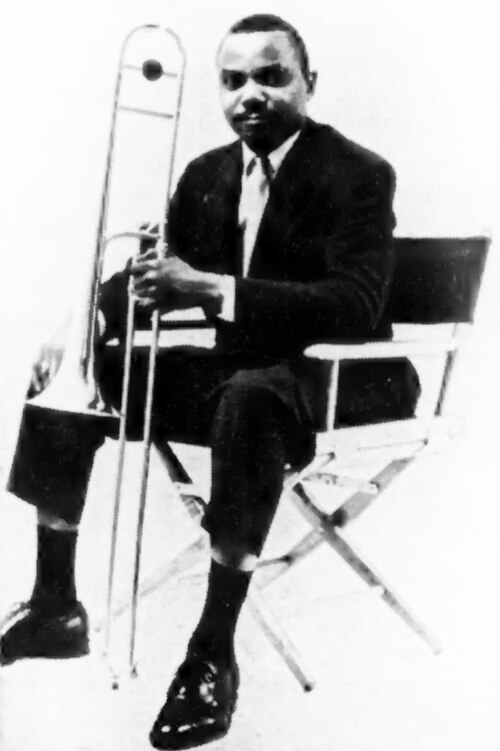
Trombone-Solo · 1957
J.J. Johnson: Blues in the Closet
- Tonart
- B-Dur
- Tempo
- 234 BPM UP
- Rhythmusgefühl
- Swing
- Stil
- Bebop
- Chorusse
- 16
- Form
- A12
J.J. Johnsons Solo über „Blues in the Closet“ umfasst 812 Töne in 198 Sekunden (4.1 Töne pro Sekunde) und einen Tonumfang von 21 Halbtönen (F3 bis D5). Das Durchschnittstempo liegt bei 234 BPM (swing). Rund 53 % der Melodiebewegung verläuft schrittweise (ein bis zwei Halbtöne).
Töne
812Töne
198sSololänge
4.1Töne pro Sekunde
F3–D5Tonumfang (21 Halbtöne)
53%Schrittweise Bewegung
Verteilung der Tonklassen
C
C♯
D
E♭
E
F
F♯
G
A♭
A
B♭
B
Häufigste Intervalle
- 0 ×130
- +1 ×112
- -2 ×112
- +2 ×10⁴
- -1 ×10²
- -3 ×67
Gespielte Changes
A1
Platte
- Platte
- Stan Getz and J.J. Johnson At The Opera House · Polydor K.K · 1995
- Aufgenommen
- 1957-09-29
- Besetzung
- Stan Getz (ts); J.J. Johnson (tb); Oscar Peterson (p); Herb Ellis (g); Ray Brown (b); Connie Kay (dr)
- Komponist
- Pettiford
- Sololänge
- 00:36-03:55
Quelle: Weimar Jazz Database, Jazzomat Research Project (HfM Weimar), ODbL 1.0.