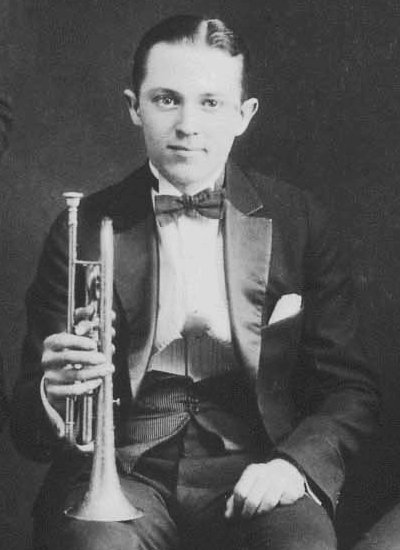
assolo di Cornet · 1927
Bix Beiderbecke: Singin the Blues
- Tonalità
- Mi♭ maggiore
- Tempo
- 134 BPM MEDIUM
- Feel ritmico
- Twobeat
- Stile
- Traditional
- Chorus
- 1
- Forma
- A8A8B8
L'assolo di Bix Beiderbecke su «Singin the Blues» conta 160 note in 57 secondi (2.8 note al secondo) e un'estensione di 23 semitoni, da Bb3 a A5. Il tempo medio è di 134 BPM (twobeat). Circa il 42% del movimento melodico è per grado congiunto (uno o due semitoni).
Note
160Note
57sDurata dell'assolo
2.8Note al secondo
Bb3–A5Estensione (23 semitoni)
42%Moto congiunto
Distribuzione delle classi di altezza
C
C♯
D
E♭
E
F
F♯
G
A♭
A
B♭
B
Intervalli più frequenti
- +1 ×33
- -3 ×17
- -4 ×17
- -2 ×16
- -1 ×12
- +3 ×10
Giro armonico
A1
B1
C1
Disco
- Disco
- The Gold Collection - 40 Classic Performances · Proper/Retro · 1997
- Registrato
- 04.20.1927
- Formazione
- Bix Beiderbecke (cor); Frank Trumbauer (ts-c); Jimmy Dorsey (cl, as); Miff Mole (tb); Paul Mertz (p); Eddie Lang (g); Chauncey Morehouse (dr)
- Compositore
- Robinson/Conrad
- Durata dell'assolo
- 01:02-02:02
Fonte: Weimar Jazz Database, Jazzomat Research Project (HfM Weimar), ODbL 1.0.