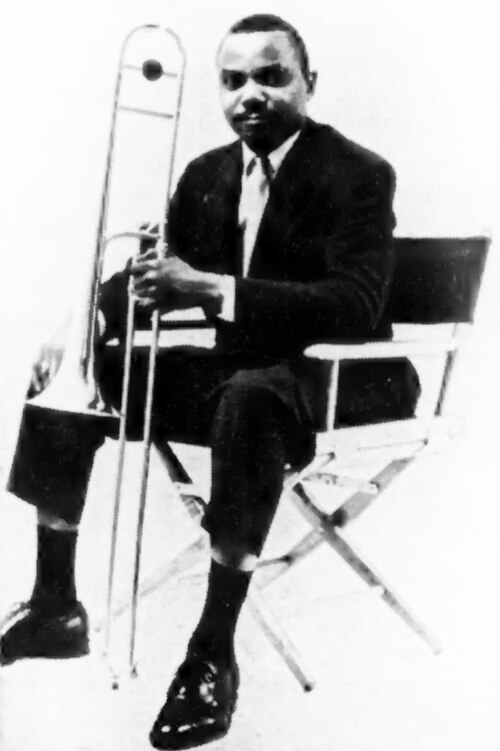
assolo di Trombone · 1949
J.J. Johnson: Blue Mode
- Tonalità
- Si♭ maggiore
- Tempo
- 64 BPM SLOW
- Feel ritmico
- Swing
- Stile
- Bebop
- Chorus
- 1
- Forma
- A12
L'assolo di J.J. Johnson su «Blue Mode» conta 222 note in 90 secondi (2.5 note al secondo) e un'estensione di 22 semitoni, da Eb3 a C#5. Il tempo medio è di 64 BPM (swing). Circa il 53% del movimento melodico è per grado congiunto (uno o due semitoni).
Note
222Note
90sDurata dell'assolo
2.5Note al secondo
Eb3–C#5Estensione (22 semitoni)
53%Moto congiunto
Distribuzione delle classi di altezza
C
C♯
D
E♭
E
F
F♯
G
A♭
A
B♭
B
Intervalli più frequenti
- -2 ×41
- -1 ×36
- +3 ×28
- +1 ×20
- +2 ×18
- -3 ×12
Giro armonico
A1
B1
I1
Disco
- Disco
- Quadromania Jazz Edition, Sonny Stitt, One O'Clock Jump, CD 2 · Membran Music Ltd. · 2005
- Registrato
- 1949-10-17
- Formazione
- Sonny Stitt (ts); J.J. Johnson (tb); John Lewis (p); Nelson Boyd (b); Max Roach (dr)
- Compositore
- J.J. Johnson
- Durata dell'assolo
- 00:36-02:07
Fonte: Weimar Jazz Database, Jazzomat Research Project (HfM Weimar), ODbL 1.0.