- Nascita
- 28 ottobre 1941
Portland - Paese
- Stati Uniti
- Attività
- 1955–
- Etichette
- Blue Coast Records
- Discografia
- 3 album
Biografia
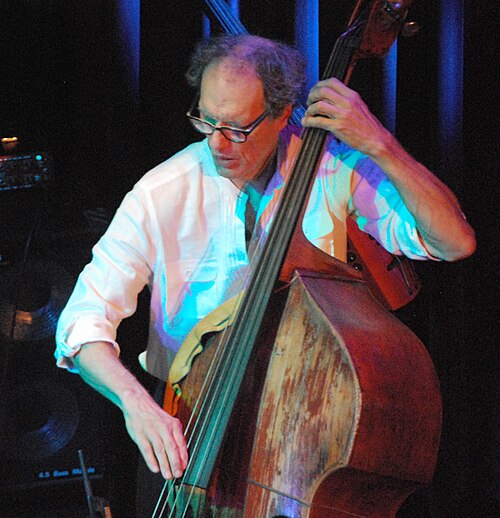
Glen Moore è un musicista jazz (contrabbasso). Nato il 28 ottobre 1941 a Portland. Lo stile è di solito associato a jazz. Etichette: Blue Coast Records. La discografia qui comprende 3 album, da «In Concert» (1977) a «May 24, 1976» (2019).
Glen Moore (Portland, 28 ottobre 1941) è un bassista statunitense, specializzato nella musica jazz, che occasionalmente si esibisce al pianoforte, al flauto e al violino.
Leggi la voce completa su Wikipedia ↗ · Da Wikipedia, l'enciclopedia libera (CC BY-SA 4.0)
Discografia
Album in studio e dal vivo
Suona anche in
Album in cui Glen Moore compare come sideman
| 1969 | This Is Jeremy Steig — Jeremy Steig |
| 1975 | The Restful Mind — Larry Coryell |
| 1978 | Difference — Larry Coryell |
| 1978 | Out of the Woods — Oregon |
| 1983 | Oregon — Oregon |
| 1985 | Crossing — Oregon |
| 1987 | Between Dusk and Dawn — Rabih Abou-Khalil |
| 1987 | Ecotopia — Oregon |
| 1990 | Roots & Sprouts — Rabih Abou‐Khalil |
| 1991 | Al-Jadida — Rabih Abou‐Khalil |
| 1994 | Troika — Oregon |
| 1997 | Northwest Passage — Oregon |
| 2000 | Vanguard Sessions: Best of the Vanguard Years — Oregon |
| 2000 | Oregon in Moscow — Oregon |
| 2002 | Violin — Oregon |
| 2002 | Live at Yoshi's — Oregon |
Membro di

Domande frequenti
Che strumento suona Glen Moore?
Glen Moore è noto per contrabbasso.
Quando e dove è nato Glen Moore?
Glen Moore è nato 28 ottobre 1941 a Portland.
Quali sono gli album più noti di Glen Moore?
Nel nostro archivio ci sono, tra gli altri, In Concert (1977), Nude Bass Ascending… (1999) e May 24, 1976 (2019).
Collegamenti esterni
- en.wikipedia.org ↗
- de.wikipedia.org ↗
- it.wikipedia.org ↗
- wikidata.org ↗
- musicbrainz.org ↗
- discogs.com ↗
- allmusic.com ↗
Dati raccolti da fonti aperte; vedi i riferimenti qui sotto. Hai trovato un errore? Scrivici.