- Nascita
- 1950s
Swansea - Paese
- Regno Unito
- Attività
- 1980–
Biografia
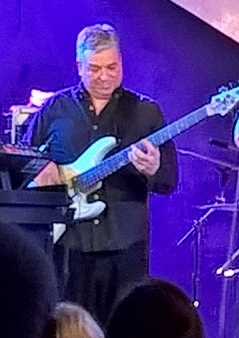
Laurence Cottle è un musicista jazz (chitarra basso). Nato nel 1950s a Swansea. Lo stile è di solito associato a jazz.
Laurence Cottle, detto Lol (Swansea, 16 dicembre 1961), è un bassista e compositore britannico naturalizzato statunitense. Ha collaborato con musicisti dei generi più disparati (pop, jazz, blues ed heavy metal) come Sting, Alan Parsons, Cher, Black Sabbath, Eric Clapton, Gary Moore, Don Airey, Hanson, Nina Hagen, Mike Oldfield, Fabio Concato. Inoltre ha una propria jazz band, la Laurence Cottle Big Band. È anche un prolifico compositore di colonne sonore cinematografiche (gran parte di queste, realizzate con il direttore d'orchestra Michael Kamen). Sono da citare quella di Arma letale, Crossroads e del telefilm Friends. Inoltre, cura le musiche di vari programmi televisivi, come l'Oprah Winfrey Show, Nickelodeon News, Full Body Massage.
Leggi la voce completa su Wikipedia ↗ · Da Wikipedia, l'enciclopedia libera (CC BY-SA 4.0)
Suona anche in
Album in cui Laurence Cottle compare come sideman
| 1986 | August — Eric Clapton |
| 1986 | The Message — Chi Coltrane |
| 1990 | A Clearer View — Jason Rebello |
| 2010 | Dirty & Beautiful, Volume 1 — Gary Husband |
| 2011 | The Peacemakers — Karl Jenkins |
| 2011 | Witchcraft — Claire Martin & Richard Rodney Bennett |
| 2012 | Too Much in Love to Care — Claire Martin sings with Kenny Barron |
| 2012 | Dirty & Beautiful, Volume 2 — Gary Husband |
Domande frequenti
Che strumento suona Laurence Cottle?
Laurence Cottle è noto per chitarra basso.
Quando e dove è nato Laurence Cottle?
Laurence Cottle è nato 1950s a Swansea.
Collegamenti esterni
- en.wikipedia.org ↗
- it.wikipedia.org ↗
- wikidata.org ↗
- musicbrainz.org ↗
- discogs.com ↗
- allmusic.com ↗
- laurencecottle.com ↗
Dati raccolti da fonti aperte; vedi i riferimenti qui sotto. Hai trovato un errore? Scrivici.