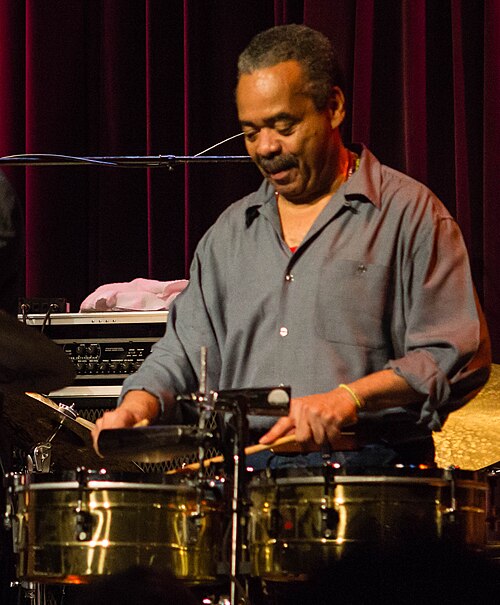
- Nascita
- 24 febbraio 1945
New York - Morte
- 24 luglio 2013
New York - Paese
- Stati Uniti
- Discografia
- 1 album
Biografia
Steve Berrios è stato un musicista jazz (batteria, conga e timpano). Nato il 24 febbraio 1945 a New York, morto il 24 luglio 2013 a New York. Lo stile è di solito associato a jazz.
Discografia
Album in studio e dal vivo
Suona anche in
Album in cui Steve Berrios compare come sideman
| 1958 | Safari With Sabu — Louis “Sabu” Martinez |
| 1968 | Soul Bag — Mongo Santamaría |
| 1971 | Mongo at Montreux — Mongo Santamaría |
| 1972 | Up From the Roots — Mongo Santamaria |
| 1974 | Carnival: Live at Montreux '74 — Randy Weston |
| 1979 | Red Hot — Mongo Santamaría |
| 1989 | The Standard Bearer — Wallace Roney |
| 1989 | Strut — Hilton Ruiz |
| 1990 | Now You See It... (Now You Don't) — Michael Brecker |
| 1993 | Tailor Made — Bobby Watson |
| 1994 | All My Tomorrows — Grover Washington, Jr. |
| 1994 | Heroes — Hilton Ruiz |
| 1995 | Mongo Returns — Mongo Santamaría |
| 1995 | Hands on Percussion — Hilton Ruiz |
| 1996 | From Now On — Sonny Fortune |
| 1997 | Village — Wallace Roney |
| 1999 | Mongo '70 / Mongo at Montreux — Mongo Santamaría |
| 2003 | Continuum — Sonny Fortune |
| 2003 | Montreux Heat! — Mongo Santamaria |
| 2006 | Blues at Bradley's — Charles Fambrough |
Domande frequenti
Che strumento suonava Steve Berrios?
Steve Berrios è noto per batteria, conga e timpano.
Quando e dove è nato Steve Berrios?
Steve Berrios è nato 24 febbraio 1945 a New York.
Collegamenti esterni
Dati raccolti da fonti aperte; vedi i riferimenti qui sotto. Hai trovato un errore? Scrivici.