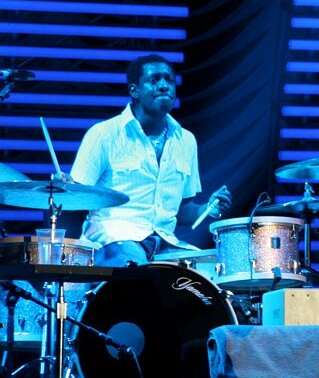
Steve Jordan
Foto: Ckuhl at Dutch Wikipedia, CC BY-SA 3.0, via Wikimedia Commons

Batteristi · n. 1957

Steve Jordan

Batterista, compositore e produttore discografico statunitense

Nascita
14 gennaio 1957
New York
Paese
Stati Uniti
Attività
1978–
Etichette
Virgin Records

Biografia

Steve Jordan è un musicista jazz (batteria). Nato il 14 gennaio 1957 a New York. Lo stile è di solito associato a funk e world music. Etichette: Virgin Records.

Steve Jordan (New York, 14 gennaio 1957) è un batterista, compositore e produttore discografico statunitense, è stato il batterista di band come The Blues Brothers e John Mayer Trio. È stato inoltre membro di numerosi gruppi e complessi musicali e ha impegnato gran parte della sua carriera accompagnando altri musicisti sia come turnista che negli studi di registrazione. Ha ottenuto un certo grado di visibilità come membro, autore e co-produttore del progetto di Keith Richards X-Pensive Winos, oltre che come batterista del John Mayer Trio. Ha inoltre accompagnato il chitarrista Eric Clapton come turnista. Nel 2021 ha sostituito il batterista Charlie Watts nella tournée dei Rolling Stones No Filter Tour ed in quelli successivi.

Leggi la voce completa su Wikipedia ↗ · Da Wikipedia, l'enciclopedia libera (CC BY-SA 4.0)

Suona anche in

Album in cui Steve Jordan compare come sideman

1977 Havana Candy — Patti Austin drums (drum set)
1978 Sunbelt — Herbie Mann drums (drum set)
1978 Montreux Concert — Don Pullen drums (drum set)
1979 Who's Who? — John Scofield drums (drum set)
1979 Morning Dance — Spyro Gyra membranophone
1979 To Touch You Again — John Tropea drums (drum set)
1980 Carnaval — Spyro Gyra drums (drum set)
1980 Detente — The Brecker Brothers drums (drum set)
1981 Eyewitness — Steve Khan drums (drum set)
1982 The Nightfly — Donald Fagen drums (drum set)
1983 In Your Eyes — George Benson drums (drum set)
1983 Casa Loco — Steve Khan, Anthony Jackson, Steve Jordan, Manolo Badrena drums (drum set)
1983 City Kids — Spyro Gyra drums (drum set)
1984 Electric Outlet — John Scofield drums (drum set)
1985 Hearts and Numbers — Don Grolnick feat. Michael Brecker drums (drum set)
1986 Fahrenheit — Toto percussion
1986 Upside Downside — Mike Stern drums (drum set)
1987 The Camera Never Lies — Michael Franks drums (drum set)
1988 Close‐Up — David Sanborn drums (drum set), guitar
1988 Street Dreams — Lyle Mays drums (drum set)
1989 A Question of Time — Jack Bruce percussion
1991 Here’s to the People — Sonny Rollins drums (drum set)
1991 Another Hand — David Sanborn drums (drum set)
1994 That’s the Way It Should Be — Booker T. & the MG’s percussion, membranophone, congas, bongos, guitar family, vocals
1994 Out of the Loop — The Brecker Brothers drums (drum set)
1999 Priceless Jazz Collection — The Brecker Brothers drums (drum set)
2000 The Door — Keb’ Mo’ percussion, drums (drum set)
2001 Gotcha! — Ernest Ranglin vocals
2005 Possibilities — Herbie Hancock drums (drum set), producer
2005 That's What I Say: John Scofield Plays the Music of Ray Charles — John Scofield arranger, drums (drum set), producer, percussion, background vocals, other vocals

Dischi storici a 78 giri

  • Capital Idea The Gene Krupa Sextet · Gene Krupa · Charlie Shavers · Willie Smith… archive.org ↗
  • Overtime The Gene Krupa Sextet · Gene Krupa · Charlie Shavers · Willie Smith… archive.org ↗
  • Capital Idea The Gene Krupa Sextet · Gene Krupa · Charlie Shavers · Willie Smith… · 1954 archive.org ↗
  • Overtime The Gene Krupa Sextet · Gene Krupa · Charlie Shavers · Willie Smith… · 1954 archive.org ↗

Domande frequenti

Che strumento suona Steve Jordan?

Steve Jordan è noto per batteria.

Quando e dove è nato Steve Jordan?

Steve Jordan è nato 14 gennaio 1957 a New York.

Collegamenti esterni

Dati raccolti da fonti aperte; vedi i riferimenti qui sotto. Hai trovato un errore? Scrivici.

Latest posts

  1. Evaluating Jazz Syncopation Sources and Rhythmic Analysis
  2. Instruments of Bossa Nova Essential Tools for the Sound
  3. Why Is Improv Important in Jazz and How It Defines the Genre
  4. How to Memorize Jazz Standards Efficiently
  5. What Is the Most Well-Known Jazz Standard and Why It Wins
  6. What Does the ø Symbol Mean in Jazz Theory
  7. Examples of Bebop Jazz and Essential Listening Tracks
  8. What Is a Basic Drumming Pattern Called and How It Works
  9. How to Ear Train Effectively for Better Musicianship
  10. How to Notate a Tritone Substitution in Jazz Charts