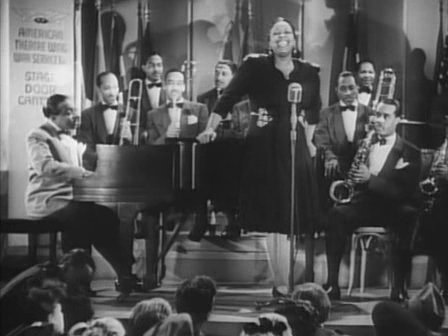
Al Grey
Foto: William P. Gottlieb / Adam Cuerden, Public domain, via Wikimedia Commons

Posaunisten · 1925–2000

Al Grey

US-amerikanischer Posaunist

Geboren
6. Juni 1925
Aldie
Gestorben
24. März 2000
Scottsdale
Land
Vereinigte Staaten
Aktiv
1946–1990
Plattenlabels
Gemini Records
Diskografie
15 Alben

Biografie

Al Grey war ein Jazzmusiker (Posaune). Al Grey wurde am 6. Juni 1925 in Aldie geboren und starb am 24. März 2000 in Scottsdale. Stilistisch wird die Musik meist Jazz, big band music und crossover jazz zugeordnet. Plattenlabels: Gemini Records. Die Diskografie umfasst hier 15 Alben, von „Snap Your Fingers“ (1962) bis „Al Grey & Billy Mitchell Sextet & Septet · Live At The Museum Of Modern Art & At Birdland“ (2023).

Albert Thornton „Al“ Grey (* 6. Juni 1925 in Aldie, Virginia; † 24. März 2000 in Phoenix, Arizona) war einer der führenden Jazzposaunisten des 20. Jahrhunderts. Als Mitglied der Count Basie Big Band trug er zu einigen deren größten Erfolge bei. Al Grey beherrschte den Umgang mit dem Plunger-Dämpfer wie kaum ein anderer.

Den vollständigen Artikel auf Wikipedia lesen ↗ · Aus Wikipedia, der freien Enzyklopädie (CC BY-SA 4.0)

Diskografie

Studio- und Livealben

Spielt außerdem auf

Alben, auf denen Al Grey als Sideman mitwirkt

1957 Dizzy in Greece — Dizzy Gillespie trombone
1958 The Atomic Mr. Basie — Count Basie Orchestra + Neal Hefti Arrangements trombone
1958 Basie Plays Hefti — Count Basie trombone
1959 Welcome to the Club — Nat King Cole trombone
1959 Count Basie and His Orchestra Swings / Tony Bennett Sings — Basie / Bennett trombone
1959 No Count Sarah — Sarah Vaughan trombone
1959 Sings Ballads of the Sad Cafe — Chris Connor trombone
1959 Motor City Scene — Thad Jones trombone
1959 Breakfast Dance and Barbecue — The Count Basie Orchestra with Joe Williams trombone
1960 I Gotta Right to Swing — Sammy Davis Jr. trombone
1960 Early in the Morning — Lorez Alexandria With The Ramsey Lewis Trio trombone
1961 Genius + Soul = Jazz — Ray Charles trombone
1961 I’ve Grown Accustomed to Her Face — Tony Bennett, Al Tornello trombone
1961 Count Basie / Sarah Vaughan — Count Basie & Sarah Vaughan trombone
1965 Basie Picks the Winners — Count Basie trombone
1965 Big Band Scene '65 — Count Basie & Maynard Ferguson trombone
1966 Arthur Prysock / Count Basie — Arthur Prysock / Count Basie trombone
1966 Sinatra at the Sands — Frank Sinatra with Count Basie & His Orchestra instruments
1970 Louis Armstrong and His Friends — Louis Armstrong trombone
1972 Count Basie + Voices — Count Basie trombone
1983 Life Ain't Easy — Big Joe Turner trombone
1984 Things Are Getting Better All the Time — J.J. Johnson & Al Grey trombone
1984 Keep on Pushin' — Arnett Cobb trombone
1989 All That Jazz — Ella Fitzgerald trombone
1989 Tony Bennett with the Count Basie Orchestra — Tony Bennett with The Count Basie Orchestra trombone
1989 Count Basie Jam / Montreux '77 — Count Basie trombone
1989 One O'Clock Jump — Count Basie trombone
1989 Basie Boogie — Count Basie trombone
1989 Flip, Flop & Fly — Big Joe Turner with Count Basie & His Orchestra trombone
1989 Just Jazz — Buddy Tate, Al Grey trombone

Mitglied von

Häufige Fragen

Welches Instrument spielte Al Grey?

Al Grey ist bekannt für Posaune.

Wann und wo wurde Al Grey geboren?

Al Grey wurde 6. Juni 1925 in Aldie geboren.

Was sind die bekanntesten Alben von Al Grey?

In unserer Datenbank finden sich unter anderem Snap Your Fingers (1962), Having a Ball (1963), Basic Grey (1976), Grey's Mood (1976) und Get It Together (1979).

Weblinks

Daten aus offenen Quellen zusammengestellt; siehe Quellenangaben unten. Fehler entdeckt? Schreiben Sie uns.

Latest posts

  1. How to Create Jazz Music A Practical Approach to Crafting
  2. How to Choose Jazz Scales with Practical Examples
  3. What Is a Jazz Lead Sheet and How Do Musicians Use It
  4. Evaluating Jazz Syncopation Sources and Rhythmic Analysis
  5. Instruments of Bossa Nova Essential Tools for the Sound
  6. Why Is Improv Important in Jazz and How It Defines the Genre
  7. How to Memorize Jazz Standards Efficiently
  8. What Is the Most Well-Known Jazz Standard and Why It Wins
  9. What Does the ø Symbol Mean in Jazz Theory
  10. Examples of Bebop Jazz and Essential Listening Tracks