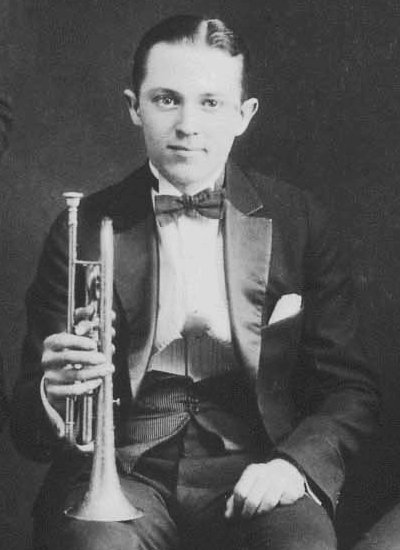
Cornet-Solo · 1927
Bix Beiderbecke: I'm Coming Virginia
- Tonart
- F-Dur
- Tempo
- 132 BPM MEDIUM
- Rhythmusgefühl
- Twobeat
- Stil
- Traditional
- Chorusse
- 2
- Form
- A8B8C8
Bix Beiderbeckes Solo über „I'm Coming Virginia“ umfasst 225 Töne in 88 Sekunden (2.5 Töne pro Sekunde) und einen Tonumfang von 23 Halbtönen (Bb3 bis A5). Das Durchschnittstempo liegt bei 132 BPM (twobeat). Rund 41 % der Melodiebewegung verläuft schrittweise (ein bis zwei Halbtöne).
Töne
225Töne
88sSololänge
2.5Töne pro Sekunde
Bb3–A5Tonumfang (23 Halbtöne)
41%Schrittweise Bewegung
Verteilung der Tonklassen
C
C♯
D
E♭
E
F
F♯
G
A♭
A
B♭
B
Häufigste Intervalle
- 0 ×28
- +1 ×27
- +3 ×27
- +2 ×26
- -2 ×25
- -3 ×18
Gespielte Changes
A1
A2
B1
Platte
- Platte
- The Gold Collection - 40 Classic Performances · Proper/Retro · 1997
- Aufgenommen
- 1927-12-05
- Besetzung
- Bix Beiderbecke (cor); Frank Trumbauer (ts-c); Don Murray (cl, bs); Bill Rank (tb); Doc Ryker (as); Irving Riskin (p); Eddie Lang (g); Chauncey Morehouse (dr)
- Komponist
- Heywood
- Sololänge
- 01:28-02:59
Quelle: Weimar Jazz Database, Jazzomat Research Project (HfM Weimar), ODbL 1.0.