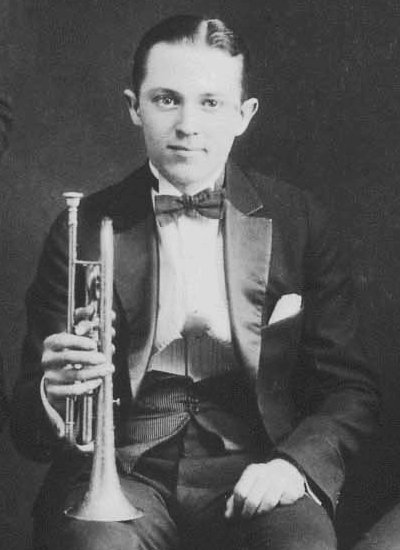
Cornet solo · 1927
Bix Beiderbecke: I'm Coming Virginia
- Key
- F major
- Tempo
- 132 BPM MEDIUM
- Rhythm feel
- Twobeat
- Style
- Traditional
- Choruses
- 2
- Form
- A8B8C8
Bix Beiderbecke's solo on “I'm Coming Virginia” has 225 notes in 88 seconds (2.5 notes per second), spanning 23 semitones from Bb3 to A5. The average tempo is 132 BPM with a twobeat feel. About 41% of the melodic motion is stepwise (one or two semitones).
Notes
225Notes
88sSolo length
2.5Notes per second
Bb3–A5Range (23 semitones)
41%Stepwise motion
Pitch-class distribution
C
C♯
D
E♭
E
F
F♯
G
A♭
A
B♭
B
Most frequent intervals
- 0 ×28
- +1 ×27
- +3 ×27
- +2 ×26
- -2 ×25
- -3 ×18
Changes played over
A1
A2
B1
Record
- Record
- The Gold Collection - 40 Classic Performances · Proper/Retro · 1997
- Recorded
- 1927-12-05
- Line-up
- Bix Beiderbecke (cor); Frank Trumbauer (ts-c); Don Murray (cl, bs); Bill Rank (tb); Doc Ryker (as); Irving Riskin (p); Eddie Lang (g); Chauncey Morehouse (dr)
- Composer
- Heywood
- Solo length
- 01:28-02:59
Source: Weimar Jazz Database, Jazzomat Research Project (HfM Weimar), ODbL 1.0.