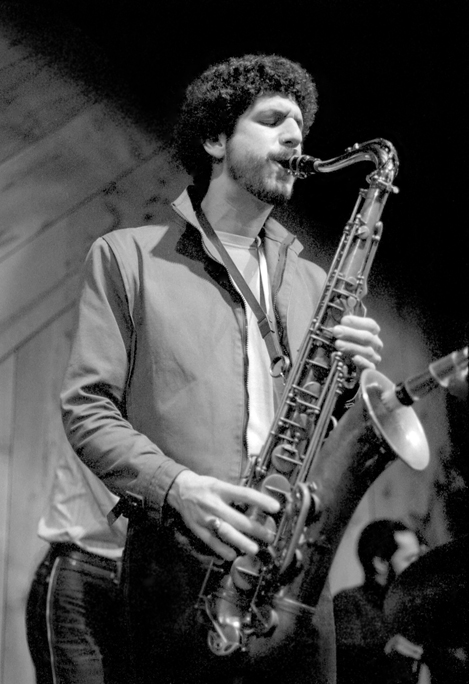
Tenor saxophone-Solo · 1979
Bob Berg: I Didn't Know What Time It Was
- Tonart
- F-Dur
- Tempo
- 127 BPM MEDIUM
- Rhythmusgefühl
- Swing
- Stil
- Postbop
- Chorusse
- 3
- Form
- A8A8B8C12
Bob Bergs Solo über „I Didn't Know What Time It Was“ umfasst 906 Töne in 204 Sekunden (4.4 Töne pro Sekunde) und einen Tonumfang von 34 Halbtönen (A2 bis G5). Das Durchschnittstempo liegt bei 127 BPM (swing). Rund 47 % der Melodiebewegung verläuft schrittweise (ein bis zwei Halbtöne).
Töne
906Töne
204sSololänge
4.4Töne pro Sekunde
A2–G5Tonumfang (34 Halbtöne)
47%Schrittweise Bewegung
Verteilung der Tonklassen
C
C♯
D
E♭
E
F
F♯
G
A♭
A
B♭
B
Häufigste Intervalle
- -1 ×133
- -2 ×131
- +2 ×82
- +1 ×80
- -4 ×71
- -3 ×68
Gespielte Changes
A1
A2
B1
A3
Platte
- Platte
- Second Set · SteepleChase · 2005
- Aufgenommen
- 1979
- Besetzung
- Bob Berg (ts); Cedar Walton (p); Sam Jones (b); Billy Higgins (dr)
- Komponist
- Lorenz Hart/Richard Rogers
- Sololänge
- 05:43-09:08
Quelle: Weimar Jazz Database, Jazzomat Research Project (HfM Weimar), ODbL 1.0.