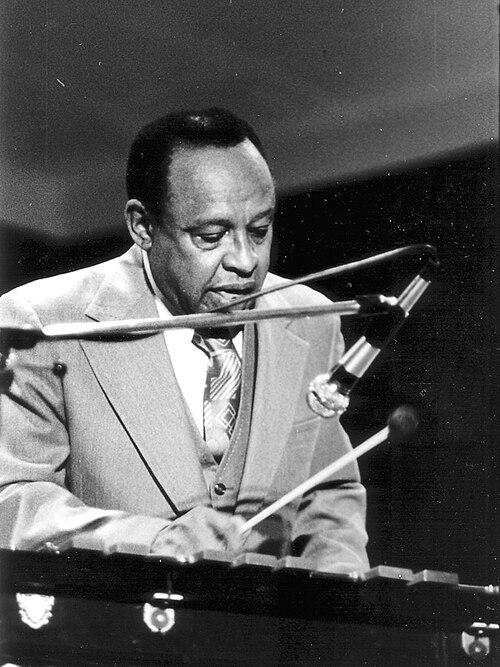
Vibraphone-Solo · 1939
Lionel Hampton: Dinah
- Tonart
- As-Dur
- Tempo
- 200 BPM UP
- Rhythmusgefühl
- Swing
- Stil
- Swing
- Chorusse
- 2
- Form
- A8A8B8A8
Lionel Hamptons Solo über „Dinah“ umfasst 311 Töne in 77 Sekunden (4 Töne pro Sekunde) und einen Tonumfang von 29 Halbtönen (Ab3 bis C#6). Das Durchschnittstempo liegt bei 200 BPM (swing). Rund 38 % der Melodiebewegung verläuft schrittweise (ein bis zwei Halbtöne).
Töne
311Töne
77sSololänge
4Töne pro Sekunde
Ab3–C#6Tonumfang (29 Halbtöne)
38%Schrittweise Bewegung
Verteilung der Tonklassen
C
C♯
D
E♭
E
F
F♯
G
A♭
A
B♭
B
Häufigste Intervalle
- -2 ×46
- 0 ×37
- +3 ×31
- +2 ×30
- -3 ×30
- -1 ×27
Gespielte Changes
A1
A2
B1
A3
Platte
- Platte
- From Swing to Bebop. Jazz in History II · History/This is Music · 1989
- Aufgenommen
- 1939-12-21
- Besetzung
- Benny Carter (tp); Edmond Hall (cl); Coleman Hawkins (ts); Joe Sullivan (p); Freddy Green (g); Artie Berstein (b); Zutty Singleton (dr); Lionel Hampton (vib)
- Komponist
- Sam M. Lewis, Joe Youg, Harry Akst
Quelle: Weimar Jazz Database, Jazzomat Research Project (HfM Weimar), ODbL 1.0.