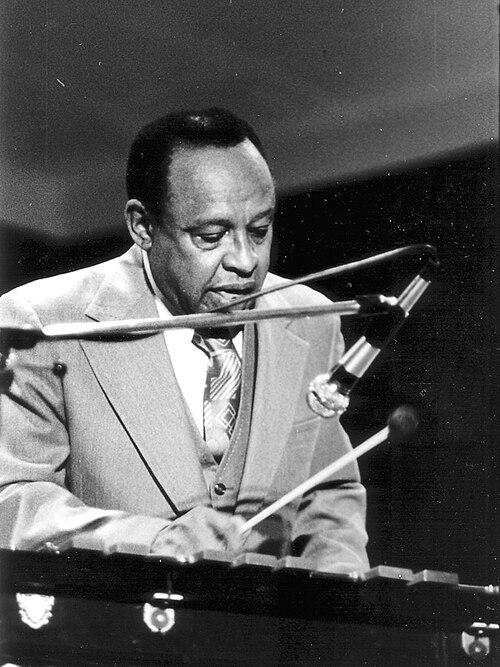
Vibraphone-Solo · 1937
Lionel Hampton: Runnin' Wild
- Tonart
- B-Dur
- Tempo
- 281 BPM UP
- Rhythmusgefühl
- Swing
- Stil
- Swing
- Chorusse
- 1
- Form
- A8A8B8B8
Lionel Hamptons Solo über „Runnin' Wild“ umfasst 164 Töne in 26 Sekunden (6.2 Töne pro Sekunde) und einen Tonumfang von 34 Halbtönen (G3 bis F6). Das Durchschnittstempo liegt bei 281 BPM (swing). Rund 27 % der Melodiebewegung verläuft schrittweise (ein bis zwei Halbtöne).
Töne
164Töne
26sSololänge
6.2Töne pro Sekunde
G3–F6Tonumfang (34 Halbtöne)
27%Schrittweise Bewegung
Verteilung der Tonklassen
C
C♯
D
E♭
E
F
F♯
G
A♭
A
B♭
B
Häufigste Intervalle
- +3 ×23
- -3 ×21
- +2 ×16
- 0 ×15
- +1 ×12
- -2 ×12
Gespielte Changes
A1
B1
Platte
- Platte
- From Swing to Bebop · History/This is Music · 1998
- Aufgenommen
- 1937-02-03
- Besetzung
- Benny Goodman (cl); Teddy Wilson (p); Gene Krupa (dr); Lionel Hampton (vib)
- Komponist
- Grey/Wood/Gibs
- Sololänge
- 01:39- 02:04
Quelle: Weimar Jazz Database, Jazzomat Research Project (HfM Weimar), ODbL 1.0.