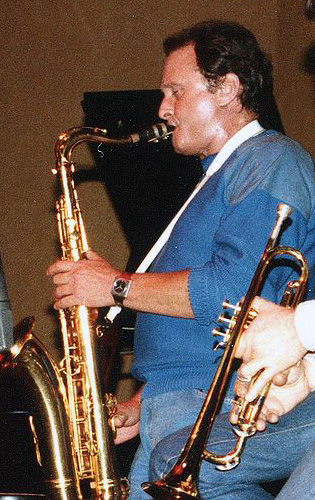
Tenor saxophone-Solo · 1957
Stan Getz: Blues in the Closet
- Tonart
- B-Dur
- Tempo
- 243 BPM UP
- Rhythmusgefühl
- Swing
- Stil
- Cool
- Chorusse
- 16
- Form
- A12
Stan Getzs Solo über „Blues in the Closet“ umfasst 905 Töne in 188 Sekunden (4.8 Töne pro Sekunde) und einen Tonumfang von 37 Halbtönen (Bb2 bis B5). Das Durchschnittstempo liegt bei 243 BPM (swing). Rund 49 % der Melodiebewegung verläuft schrittweise (ein bis zwei Halbtöne).
Töne
905Töne
188sSololänge
4.8Töne pro Sekunde
Bb2–B5Tonumfang (37 Halbtöne)
49%Schrittweise Bewegung
Verteilung der Tonklassen
C
C♯
D
E♭
E
F
F♯
G
A♭
A
B♭
B
Häufigste Intervalle
- -2 ×132
- +1 ×128
- -3 ×95
- -1 ×93
- +2 ×91
- +3 ×89
Gespielte Changes
A1
Platte
- Platte
- Stan Getz and J.J. Johnson At The Opera House · Polydor K.K · 1995
- Aufgenommen
- 1957-09-29
- Besetzung
- Stan Getz (ts); J.J. Johnson (tb); Oscar Peterson (p); Herb Ellis (g); Ray Brown (b); Connie Kay (dr)
- Komponist
- Pettiford
- Sololänge
- 03:54-07:03
Quelle: Weimar Jazz Database, Jazzomat Research Project (HfM Weimar), ODbL 1.0.