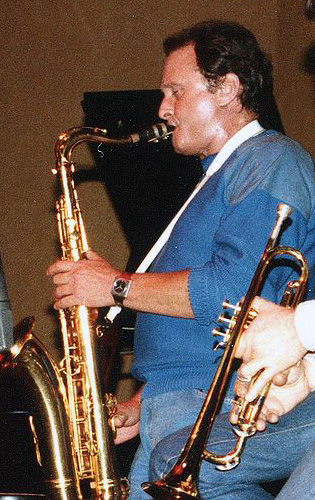
Tenor saxophone-Solo · 1957
Stan Getz: I'm Glad There Is You
- Tonart
- Des-Dur
- Tempo
- 67 BPM SLOW
- Rhythmusgefühl
- Swing
- Stil
- Cool
- Chorusse
- 1
- Form
- A8A8
Stan Getzs Solo über „I'm Glad There Is You“ umfasst 187 Töne in 63 Sekunden (3 Töne pro Sekunde) und einen Tonumfang von 26 Halbtönen (C#3 bis Eb5). Das Durchschnittstempo liegt bei 67 BPM (swing). Rund 42 % der Melodiebewegung verläuft schrittweise (ein bis zwei Halbtöne).
Töne
187Töne
63sSololänge
3Töne pro Sekunde
C#3–Eb5Tonumfang (26 Halbtöne)
42%Schrittweise Bewegung
Verteilung der Tonklassen
C
C♯
D
E♭
E
F
F♯
G
A♭
A
B♭
B
Häufigste Intervalle
- +1 ×26
- +3 ×25
- -1 ×21
- -3 ×20
- +2 ×16
- -2 ×16
Gespielte Changes
A1
A2
I1
Platte
- Platte
- Body and Soul · Universal · 2006
- Aufgenommen
- 1957-10-10
- Besetzung
- Stan Getz (ts); Oscar Peterson (p); Herb Ellis (g); Ray Brown (b)
- Komponist
- Paul Madeira, Jimmy Dorsey
- Sololänge
- 02:14-03:11
Quelle: Weimar Jazz Database, Jazzomat Research Project (HfM Weimar), ODbL 1.0.