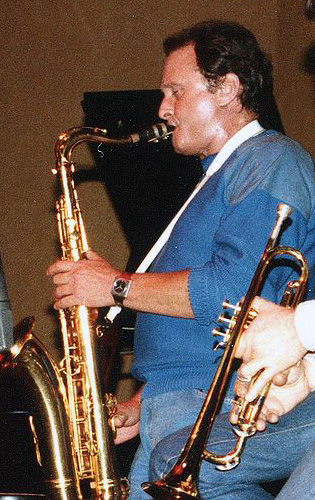
assolo di Tenor saxophone · 1957
Stan Getz: I'm Glad There Is You
- Tonalità
- Re♭ maggiore
- Tempo
- 67 BPM SLOW
- Feel ritmico
- Swing
- Stile
- Cool
- Chorus
- 1
- Forma
- A8A8
L'assolo di Stan Getz su «I'm Glad There Is You» conta 187 note in 63 secondi (3 note al secondo) e un'estensione di 26 semitoni, da C#3 a Eb5. Il tempo medio è di 67 BPM (swing). Circa il 42% del movimento melodico è per grado congiunto (uno o due semitoni).
Note
187Note
63sDurata dell'assolo
3Note al secondo
C#3–Eb5Estensione (26 semitoni)
42%Moto congiunto
Distribuzione delle classi di altezza
C
C♯
D
E♭
E
F
F♯
G
A♭
A
B♭
B
Intervalli più frequenti
- +1 ×26
- +3 ×25
- -1 ×21
- -3 ×20
- +2 ×16
- -2 ×16
Giro armonico
A1
A2
I1
Disco
- Disco
- Body and Soul · Universal · 2006
- Registrato
- 1957-10-10
- Formazione
- Stan Getz (ts); Oscar Peterson (p); Herb Ellis (g); Ray Brown (b)
- Compositore
- Paul Madeira, Jimmy Dorsey
- Durata dell'assolo
- 02:14-03:11
Fonte: Weimar Jazz Database, Jazzomat Research Project (HfM Weimar), ODbL 1.0.