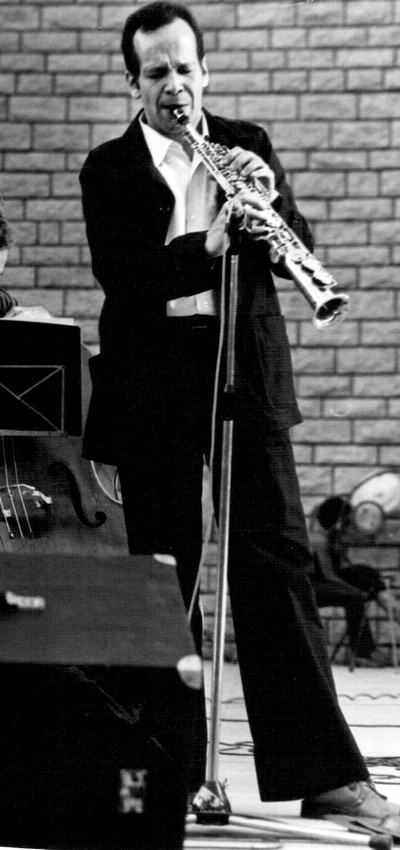
Soprano saxophone-Solo · 1957
Steve Lacy: Work
- Tonart
- Tempo
- 166 BPM MEDIUM UP
- Rhythmusgefühl
- Swing
- Stil
- Hardbop
- Chorusse
- 2
- Form
- A8A8B8
Steve Lacys Solo über „Work“ umfasst 308 Töne in 93 Sekunden (3.3 Töne pro Sekunde) und einen Tonumfang von 28 Halbtönen (Ab3 bis C6). Das Durchschnittstempo liegt bei 166 BPM (swing). Rund 49 % der Melodiebewegung verläuft schrittweise (ein bis zwei Halbtöne).
Töne
308Töne
93sSololänge
3.3Töne pro Sekunde
Ab3–C6Tonumfang (28 Halbtöne)
49%Schrittweise Bewegung
Verteilung der Tonklassen
C
C♯
D
E♭
E
F
F♯
G
A♭
A
B♭
B
Häufigste Intervalle
- -1 ×45
- +1 ×37
- -2 ×36
- +2 ×33
- 0 ×28
- -3 ×25
Gespielte Changes
A1
A2
B1
A3
Platte
- Platte
- Steve Lacy featuring Roswell Rudd, Don Cherry, Carl Brown, Bill Higgins, Winton Kelly, Buell Neidlinger, Dennis Charles and Henry Grimes · Giants of Jazz · 1995
- Aufgenommen
- 1957-11-01
- Besetzung
- Steve Lacy (ss); Wynton Kelly (p); Buell Neidlinger (b); Dennis Charles (dr)
- Komponist
- Thelonious Monk
- Sololänge
- 00:50-02:23
Quelle: Weimar Jazz Database, Jazzomat Research Project (HfM Weimar), ODbL 1.0.