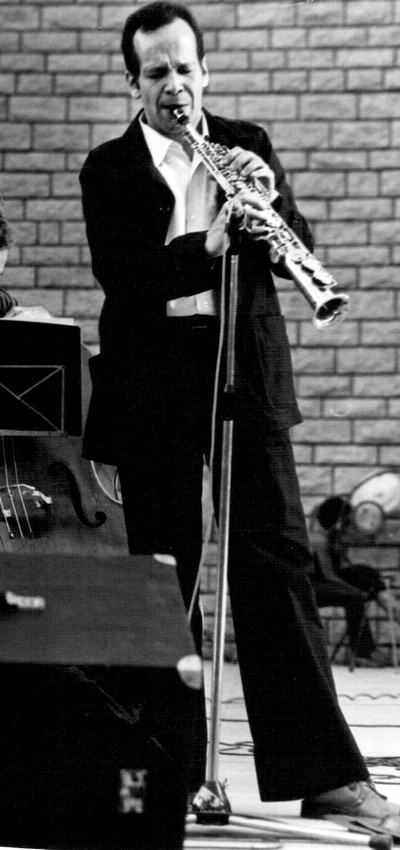
Soprano saxophone-Solo · 1961
Steve Lacy: Let's Cool One
- Tonart
- Es-Dur
- Tempo
- 132 BPM MEDIUM
- Rhythmusgefühl
- Swing
- Stil
- Hardbop
- Chorusse
- 2
- Form
- A8A8B8A8
Steve Lacys Solo über „Let's Cool One“ umfasst 352 Töne in 115 Sekunden (3.1 Töne pro Sekunde) und einen Tonumfang von 39 Halbtönen (Ab3 bis B6). Das Durchschnittstempo liegt bei 132 BPM (swing). Rund 45 % der Melodiebewegung verläuft schrittweise (ein bis zwei Halbtöne).
Töne
352Töne
115sSololänge
3.1Töne pro Sekunde
Ab3–B6Tonumfang (39 Halbtöne)
45%Schrittweise Bewegung
Verteilung der Tonklassen
C
C♯
D
E♭
E
F
F♯
G
A♭
A
B♭
B
Häufigste Intervalle
- -2 ×50
- +1 ×45
- +2 ×42
- 0 ×34
- -3 ×28
- +3 ×26
Gespielte Changes
A1
A2
B1
A3
Platte
- Platte
- Steve Lacy featuring Roswell Rudd, Don Cherry, Carl Brown, Bill Higgins, Winton Kelly, Buell Neidlinger, Dennis Charles and Henry Grimes · Giants of Jazz · 1995
- Aufgenommen
- 1961-11-14
- Besetzung
- Steve Lacy (ss); Don Cherry (trp); Carl Brown (b). Billy Higgins (dr)
- Komponist
- Thelonious Monk
- Sololänge
- 02:55-04:51
Quelle: Weimar Jazz Database, Jazzomat Research Project (HfM Weimar), ODbL 1.0.