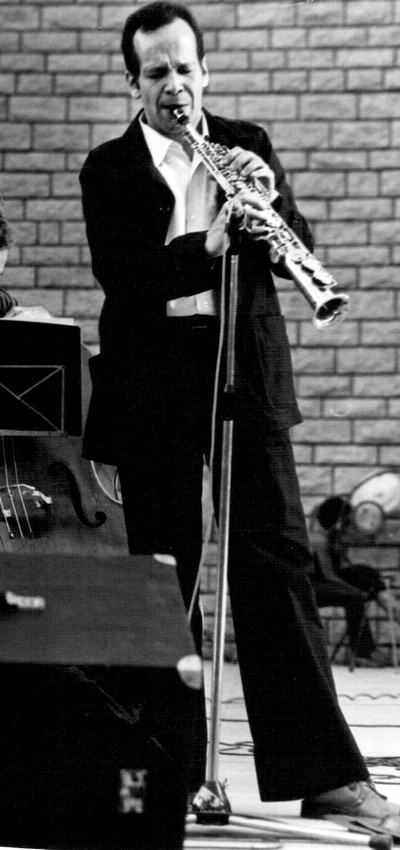
Soprano saxophone solo · 1961
Steve Lacy: Let's Cool One
- Key
- E♭ major
- Tempo
- 132 BPM MEDIUM
- Rhythm feel
- Swing
- Style
- Hardbop
- Choruses
- 2
- Form
- A8A8B8A8
Steve Lacy's solo on “Let's Cool One” has 352 notes in 115 seconds (3.1 notes per second), spanning 39 semitones from Ab3 to B6. The average tempo is 132 BPM with a swing feel. About 45% of the melodic motion is stepwise (one or two semitones).
Notes
352Notes
115sSolo length
3.1Notes per second
Ab3–B6Range (39 semitones)
45%Stepwise motion
Pitch-class distribution
C
C♯
D
E♭
E
F
F♯
G
A♭
A
B♭
B
Most frequent intervals
- -2 ×50
- +1 ×45
- +2 ×42
- 0 ×34
- -3 ×28
- +3 ×26
Changes played over
A1
A2
B1
A3
Record
- Record
- Steve Lacy featuring Roswell Rudd, Don Cherry, Carl Brown, Bill Higgins, Winton Kelly, Buell Neidlinger, Dennis Charles and Henry Grimes · Giants of Jazz · 1995
- Recorded
- 1961-11-14
- Line-up
- Steve Lacy (ss); Don Cherry (trp); Carl Brown (b). Billy Higgins (dr)
- Composer
- Thelonious Monk
- Solo length
- 02:55-04:51
Source: Weimar Jazz Database, Jazzomat Research Project (HfM Weimar), ODbL 1.0.