- Born
- 8 May 1939
Middletown - Died
- 3 July 2018
Los Angeles - Country
- United States
- Discography
- 13 albums
Biography
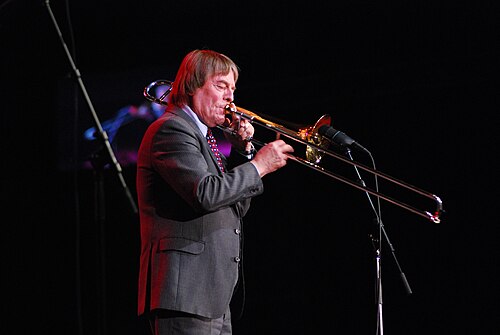
Bill Watrous was a jazz musician who played trombone. Bill Watrous was born on 8 May 1939 in Middletown and died on 3 July 2018 in Los Angeles. The music is usually filed under jazz and big band music. The discography here lists 13 albums, from “The Tiger of San Pedro” (1975) to “Bare Bones” (2013).
William Russell Watrous III (June 8, 1939 – July 2, 2018) was an American jazz trombonist. He is perhaps best known for his rendition of Sammy Nestico's arrangement of the Johnny Mandel ballad "A Time for Love", which he recorded on a 1993 album of the same name. A self-described "bop-oriented" player, he was well known among trombonists as a master technician and for his mellifluous sound.
Read the full article on Wikipedia ↗ · From Wikipedia, the free encyclopedia (CC BY-SA 4.0)
Discography
Studio and live albums
Also plays on
Albums where Bill Watrous is credited as a sideman
Frequently asked questions
What instrument did Bill Watrous play?
Bill Watrous is known for playing trombone.
When and where was Bill Watrous born?
Bill Watrous was born 8 May 1939 in Middletown.
What are Bill Watrous's best-known albums?
Albums in our database include The Tiger of San Pedro (1975), L.A. Bound (1979), Bill Watrous in London: Live at the Pizza Express (1982), Bill Watrous & Carl Fontana (1984) and Someplace Else (1986).
External links
- en.wikipedia.org ↗
- de.wikipedia.org ↗
- it.wikipedia.org ↗
- wikidata.org ↗
- musicbrainz.org ↗
- discogs.com ↗
- allmusic.com ↗
Data compiled from open sources; see the source links below. Spotted an error? Let us know.