Biography
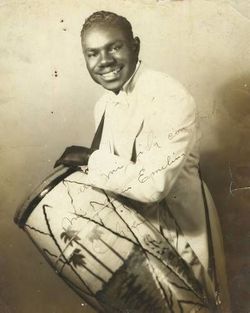
Chano Pozo was a jazz musician who played percussion instrument. Chano Pozo was born on 7 January 1915 in Havana and died on 2 December 1948 in New York City. The music is usually filed under Latin jazz. The discography here lists 2 albums, from “Dizzy Gillespie and His Orchestra” (1954) to “In Concert” (1993).
Luciano Pozo González (January 7, 1915 – December 2, 1948), known professionally as Chano Pozo, was a Cuban jazz percussionist, singer, dancer, and composer. Despite only living to the age of 33, he played a major role in the founding of Latin jazz. He co-wrote some of Dizzy Gillespie's Latin-flavored compositions, such as "Manteca" and "Tin Tin Deo", and was the first Latin percussionist in Gillespie's band. According to Rebeca Mauleón, "Few percussionists have played as integral a role in shaping Latin music as Luciano 'Chano' Pozo González."
Read the full article on Wikipedia ↗ · From Wikipedia, the free encyclopedia (CC BY-SA 4.0)
Discography
Studio and live albums
Also plays on
Albums where Chano Pozo is credited as a sideman
Frequently asked questions
What instrument did Chano Pozo play?
Chano Pozo is known for playing percussion instrument.
When and where was Chano Pozo born?
Chano Pozo was born 7 January 1915 in Havana.
External links
Data compiled from open sources; see the source links below. Spotted an error? Let us know.