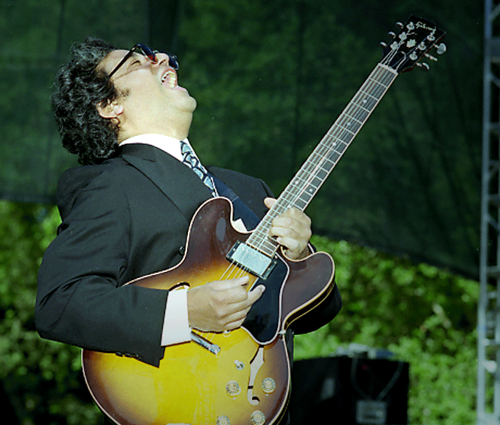
- Born
- 19 November 1955
San Jose - Country
- United States
- Active
- 1987–
- Record labels
- Blind Pig Records
- Discography
- 12 albums
Biography
Chris Cain is a jazz musician who plays guitar. Chris Cain was born on 19 November 1955 in San Jose. The music is usually filed under blues. Record labels: Blind Pig Records. The discography here lists 12 albums, from “Cuttin' Loose” (1990) to “Good Intentions Gone Bad” (2024).
Chris Cain (born November 19, 1955) is an American blues musician. He began playing professionally as a teenager in local clubs, at festivals, and at private events. He attended Pomona College. Cain received four Blues Music Award nominations in 1987 for his debut album, Late Night City Blues, including Guitarist of the Year. He signed to Blind Pig Records in 1990 and released his second album, Cuttin' Loose, then released Can't Buy A Break in 1992 and Somewhere Along the Way in 1995. 2018 brought more nominations, including Blues Music Awards Guitarist of the Year, Blues Blast Awards Best Males Blues Artist and Best Contemporary Blues Album for the 2017 release, Chris Cain.
Read the full article on Wikipedia ↗ · From Wikipedia, the free encyclopedia (CC BY-SA 4.0)
Discography
Studio and live albums
Frequently asked questions
What instrument does Chris Cain play?
Chris Cain is known for playing guitar.
When and where was Chris Cain born?
Chris Cain was born 19 November 1955 in San Jose.
What are Chris Cain's best-known albums?
Albums in our database include Cuttin' Loose (1990), Somewhere Along the Way (1995), Unscheduled Flight (1997), Live at the Rep (1998) and Blues For The Holidays (Featuring Five New Original Songs By Chris Cain) (1999).
External links
Data compiled from open sources; see the source links below. Spotted an error? Let us know.