- Born
- 11 December 1961
Chicago - Country
- United States
- Active
- 1983–
Biography
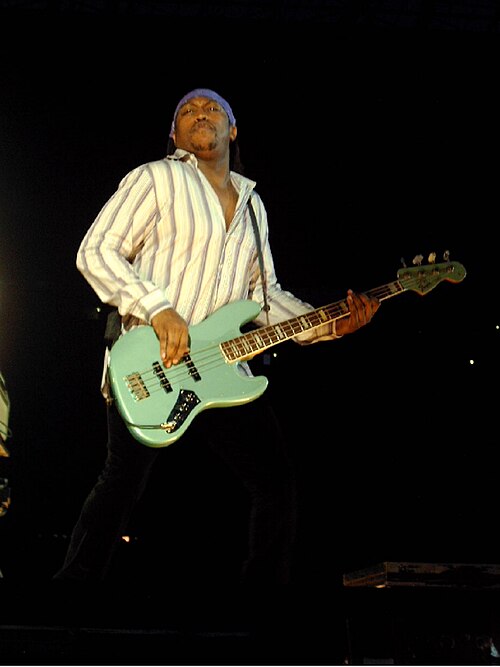
Darryl Jones is a jazz musician who plays electric bass guitar. Darryl Jones was born on 11 December 1961 in Chicago. The music is usually filed under jazz and rock music.
Darryl Jones (born December 11, 1961) is an American bassist. He has been recording and touring with the Rolling Stones since 1993. He has also played in bands with Miles Davis and Sting, among others.
Read the full article on Wikipedia ↗ · From Wikipedia, the free encyclopedia (CC BY-SA 4.0)
Also plays on
Albums where Darryl Jones is credited as a sideman
| 1984 | Decoy — Miles Davis |
| 1985 | You’re Under Arrest — Miles Davis |
| 1986 | Inside Out — Philip Bailey |
| 1986 | Still Warm — John Scofield |
| 1988 | Joy Ryder — Wayne Shorter |
| 1989 | Journeyman — Eric Clapton |
| 1989 | Prisoner of Love — Kenny Garrett |
| 1990 | Charming Snakes — Andy Summers |
| 1994 | The Tip — David Murray |
| 1994 | Live in Tokyo 1986 — Steps Ahead |
| 1994 | Buckshot LeFonque — Buckshot LeFonque |
| 1995 | Jug‐A‐Lug — David Murray |
| 2013 | Understanding — Wallace Roney |
Frequently asked questions
What instrument does Darryl Jones play?
Darryl Jones is known for playing electric bass guitar.
When and where was Darryl Jones born?
Darryl Jones was born 11 December 1961 in Chicago.
External links
- en.wikipedia.org ↗
- de.wikipedia.org ↗
- it.wikipedia.org ↗
- wikidata.org ↗
- musicbrainz.org ↗
- discogs.com ↗
- allmusic.com ↗
- darryljones.com ↗
Data compiled from open sources; see the source links below. Spotted an error? Let us know.