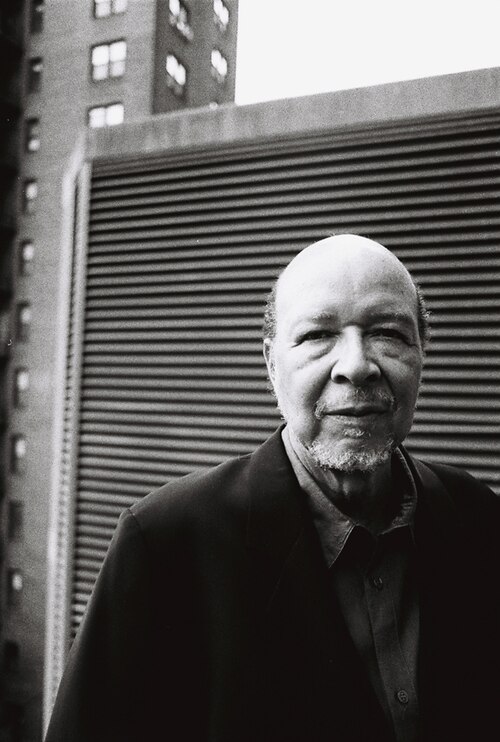
Dave Burrell
Photo: Shawn Brackbill Brooklyn, NY, CC BY 2.0, via Wikimedia Commons

Pianists · b. 1940

Dave Burrell

American musician

Born
10 September 1940
Middletown
Country
United States
Record labels
Columbia Records, BYG Records
Discography
23 albums

Biography

Dave Burrell is a jazz musician who plays piano. Dave Burrell was born on 10 September 1940 in Middletown. The music is usually filed under jazz and post-bop. Record labels: Columbia Records and BYG Records. The discography here lists 23 albums, from “Echo” (1969) to “Reservoir” (2026). Honours include Pew Fellowship in the Arts (1996).

Herman Davis "Dave" Burrell (born September 10, 1940) is an American jazz pianist. He has played with many jazz musicians including Archie Shepp, Pharoah Sanders, Marion Brown and David Murray.

Read the full article on Wikipedia ↗ · From Wikipedia, the free encyclopedia (CC BY-SA 4.0)

Discography

Studio and live albums

Echo 1969 · BYG Records
La Vie de Bohême 1970 · BYG Records After Love 1971 · America Records
Only Me - Piano Solo 1974
High Won - High Two 1976 · Arista
Black Spring 1977
Teardrops For Jimmy 1978
Lush Life 1979
Round Midnight 1979
Windward Passages 1980 · Live · HatHut Records Daybreak 1989 · Gazell Productions The Jelly Roll Joys 1991 · Gazell In Concert 1992 · Live · Les Disques Victo Brother to Brother 1993 · Gazell Productions Live at Caramoor 1999 · Sonoris Recital 2001 · Live · CIMP
Margy Pargy (In Italy Studio Recording) 2005
Consequences 2006 · Live · Amulet Records Momentum 2006 · High Two Darlingtonia 2012 · jazzwerkstatt
Dreams 2020 · Deep Jazz Reality
Harlem Rhapsody 2023 · Parco della Musica Records Reservoir 2026 · JMI Jazz

Also plays on

Albums where Dave Burrell is credited as a sideman

1967 Tauhid — Pharoah Sanders piano
1968 At Judson Hall — Noah Howard piano
1969 Blasé — Archie Shepp piano
1969 Yasmina, a Black Woman — Archie Shepp piano
1969 Black Woman — Sonny Sharrock piano
1970 Pitchin Can — Archie Shepp piano
1970 For Losers — Archie Shepp organ
1970 Black Gipsy — Archie Shepp piano
1971 Things Have Got to Change — Archie Shepp Rhodes piano
1971 Live at the Panafrican Festival — Archie Shepp piano
1972 Attica Blues — Archie Shepp electric piano
1973 The Cry of My People — Archie Shepp piano
1974 Kwanza — Archie Shepp organ, piano
1975 A Sea of Faces — Archie Shepp piano
1975 There's a Trumpet in My Soul — Archie Shepp piano
1975 Jazz a confronto 27 — Archie Shepp piano
1975 From Rag Time to No Time — Beaver Harris: The 360 Degree Music Experience piano, conductor, balafon
1976 À Massy - U-Jaama "Unité" — Archie Shepp piano
1976 Montreux Two — Archie Shepp piano
1978 Body and Soul — Archie Shepp piano
1988 Montreux One — Archie Shepp piano
1989 Stream — Archie Shepp piano
1989 Lucky Four — David Murray piano
1990 Ballads — David Murray piano
1990 Spirituals — David Murray piano
1991 Remembrances — David Murray piano
1994 Live at the Festival — Bill Evans, Bobby Hutcherson, Karin Krog & Archie Shepp piano
1994 The Rising Sun Collection — Archie Shepp piano
1994 Midnight at the Village Vanguard — Kenny Burrell producer
1997 Windward Passages — David Murray with Dave Burrell piano

Awards

Frequently asked questions

What instrument does Dave Burrell play?

Dave Burrell is known for playing piano.

When and where was Dave Burrell born?

Dave Burrell was born 10 September 1940 in Middletown.

What are Dave Burrell's best-known albums?

Albums in our database include La Vie de Bohême (1970), After Love (1971), High Won - High Two (1976), Windward Passages (1980) and Daybreak (1989).

External links

Data compiled from open sources; see the source links below. Spotted an error? Let us know.

Latest posts

  1. Evaluating Jazz Syncopation Sources and Rhythmic Analysis
  2. Instruments of Bossa Nova Essential Tools for the Sound
  3. Why Is Improv Important in Jazz and How It Defines the Genre
  4. How to Memorize Jazz Standards Efficiently
  5. What Is the Most Well-Known Jazz Standard and Why It Wins
  6. What Does the ø Symbol Mean in Jazz Theory
  7. Examples of Bebop Jazz and Essential Listening Tracks
  8. What Is a Basic Drumming Pattern Called and How It Works
  9. How to Ear Train Effectively for Better Musicianship
  10. How to Notate a Tritone Substitution in Jazz Charts