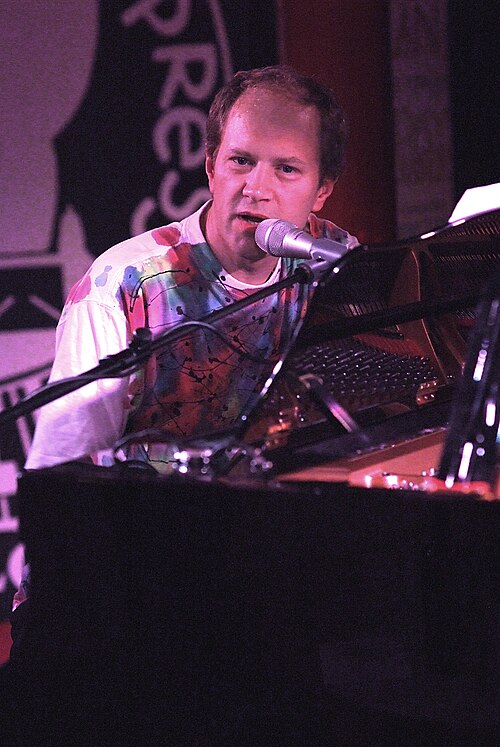
- Born
- 2 October 1960
Beckenham - Country
- United Kingdom
- Active
- 1980–
- Record labels
- E.G. Records
- Discography
- 13 albums
Biography
Django Bates is a jazz musician who plays piano and horn. Django Bates was born on 2 October 1960 in Beckenham. The music is usually filed under jazz. Record labels: E.G. Records. The discography here lists 13 albums, from “Summer Fruits (And Unrest)” (1993) to “Tenacity” (2020).
Django Bates (born Leon Bates, 2 October 1960) is a British jazz musician, composer, multi-instrumentalist, band leader and educator. He plays the piano, keyboards and the tenor horn. Bates has been described as "one of the most talented musicians Britain has produced... his work covers the entire spectrum of jazz, from early jazz through to bebop and free jazz to jazz-rock fusion." In addition to his jazz work, he is also a classical composer (writing both large- and small-scale compositions on commission), theatre composer, and has taught as a professor at various European music schools. As a leader, his bands have included Human Chain, Delightful Precipice, Quiet Nights, Powder Room Collapse Orchestra and Belovèd, and he was also a leading figure in Loose Tubes and Bill Bruford's Earthworks.
Read the full article on Wikipedia ↗ · From Wikipedia, the free encyclopedia (CC BY-SA 4.0)
Discography
Studio and live albums
Also plays on
Albums where Django Bates is credited as a sideman
Frequently asked questions
What instrument does Django Bates play?
Django Bates is known for playing piano and horn.
When and where was Django Bates born?
Django Bates was born 2 October 1960 in Beckenham.
What are Django Bates's best-known albums?
Albums in our database include Summer Fruits (And Unrest) (1993), Autumn Fires (And Green Shoots) (1994), Winter Truce (and Homes Blaze) (1995), Good Evening… Here Is the News (1996) and Like Life (1998).
External links
- en.wikipedia.org ↗
- de.wikipedia.org ↗
- it.wikipedia.org ↗
- wikidata.org ↗
- musicbrainz.org ↗
- discogs.com ↗
- allmusic.com ↗
- djangobates.co.uk ↗
Data compiled from open sources; see the source links below. Spotted an error? Let us know.