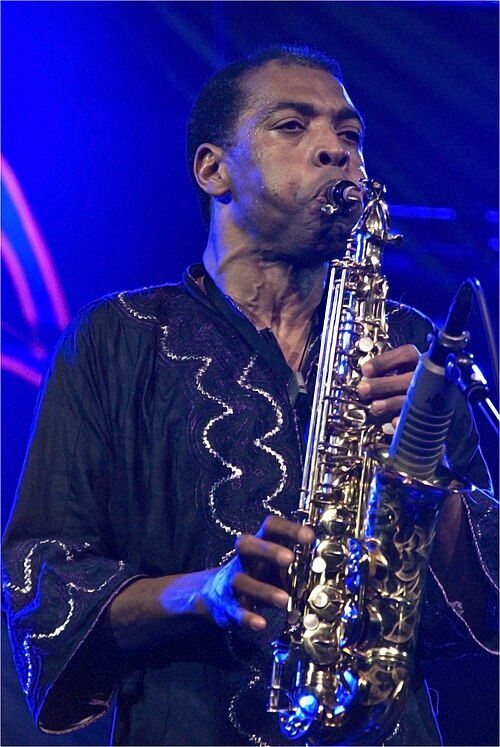
- Born
- 16 June 1962
London - Country
- United Kingdom
- Active
- 1978–
- Record labels
- Wrasse Records
- Discography
- 16 albums
Biography
Femi Kuti is a jazz musician who plays saxophone, trumpet, alto saxophone and organ. Femi Kuti was born on 16 June 1962 in London. The music is usually filed under jazz, funk and Afrobeat. Record labels: Wrasse Records. The discography here lists 16 albums, from “No Cause for Alarm?” (1989) to “Journey Through Life” (2025).
Olufela Olufemi Anikulapo Kuti (born 16 June 1962), popularly known as Femi Kuti, is a Nigerian musician born in London and raised in Lagos. He is the eldest son of Afrobeat pioneer Fela Kuti and the grandson of political campaigner, women's rights activist and traditional aristocrat Funmilayo Ransome-Kuti. Femi Kuti began his musical career playing in his father's band, Egypt 80. In 1986, Femi started his own band, Positive Force, establishing himself as an artist independent of his father's legacy.
Read the full article on Wikipedia ↗ · From Wikipedia, the free encyclopedia (CC BY-SA 4.0)
Discography
Studio and live albums
Frequently asked questions
What instrument does Femi Kuti play?
Femi Kuti is known for playing saxophone, trumpet, alto saxophone and organ.
When and where was Femi Kuti born?
Femi Kuti was born 16 June 1962 in London.
What are Femi Kuti's best-known albums?
Albums in our database include No Cause for Alarm? (1989), Femi Anikulapo Kuti and the Positive Force (1991), Femi Kuti (1995), Shoki Shoki (1998) and Fight to Win (2001).
External links
- en.wikipedia.org ↗
- de.wikipedia.org ↗
- it.wikipedia.org ↗
- wikidata.org ↗
- musicbrainz.org ↗
- discogs.com ↗
- allmusic.com ↗
- femiakuti.com ↗
Data compiled from open sources; see the source links below. Spotted an error? Let us know.