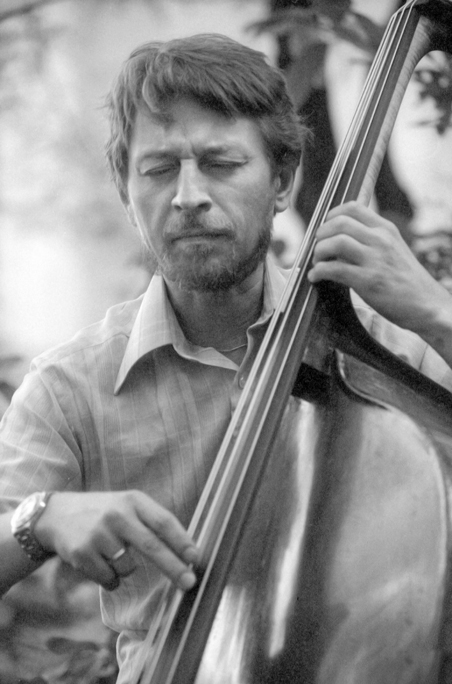
George Mraz
Photo: Brianmcmillen, CC BY-SA 4.0, via Wikimedia Commons

Bassists · 1944–2021

George Mraz

Czech jazz bassist (1944–2021)

Born
9 September 1944
Písek
Died
16 September 2021
Prague
Country
Czech Republic
Record labels
Milestone
Discography
8 albums

Biography

George Mraz was a jazz musician who played double bass and bass instrument. George Mraz was born on 9 September 1944 in Písek and died on 16 September 2021 in Prague. The music is usually filed under jazz. Record labels: Milestone. The discography here lists 8 albums, from “Porgy & Bess” (1976) to “Together Again” (2014).

George Mraz (born Jiří Mráz; 9 September 1944 – 16 September 2021) was a Czech-born American jazz bassist and alto saxophonist. He was a member of Oscar Peterson's group, and worked with Pepper Adams, Stan Getz, Michel Petrucciani, Stephane Grappelli, Tommy Flanagan, Jimmy Raney, Chet Baker, Barry Harris, Joe Henderson, John Abercrombie, John Scofield, and Richie Beirach, among others. During the 1970s, he was a member of the New York Jazz Quartet and The Thad Jones/Mel Lewis Orchestra, and in the 1980s a member of Quest. He also appeared with Joe Lovano, Hank Jones and Paul Motian on Lovano's records I'm All For You and Joyous Encounter. Mraz died on September 16, 2021, in Prague. The immediate cause of death was undisclosed, though he had battled pancreatic cancer in 2016.

Read the full article on Wikipedia ↗ · From Wikipedia, the free encyclopedia (CC BY-SA 4.0)

Discography

Studio and live albums

Also plays on

Albums where George Mraz is credited as a sideman

1972 Mirror — Charlie Mariano double bass
1972 Steve Kuhn Live in New York — Steve Kuhn bass
1974 Afro Blue — Dee Dee Bridgewater bass
1974 1 X 1 — Roland Hanna, George Mraz bass
1974 Potpourri — Thad Jones/Mel Lewis Orchestra double bass
1974 Drifting — Walter Norris & George Mraz double bass
1975 Stephane Grappelli Meets the Rhythm Section — Stephane Grappelli, Roland Hanna · Jiri Mraz · Mel Lewis bass
1975 Zoot Sims and the Gershwin Brothers — Zoot Sims double bass
1975 Twelfth & Pingree — Pepper Adams double bass
1975 Suite for Pops — Thad Jones/Mel Lewis Orchestra bass
1976 Soprano Sax — Zoot Sims double bass
1976 24 Preludes - Book 1 — Roland Hanna bass
1976 Julian — Pepper Adams double bass
1976 New Life — Thad Jones/Mel Lewis Orchestra bass
1977 Three or Four Shades of Blues — Charles Mingus bass
1977 Crawl Space — Art Farmer electric bass guitar
1977 Ellington Is Forever, Volume 2 — Kenny Burrell bass, double bass
1977 Eclypso — Tommy Flanagan bass
1977 "If I'm Lucky" — Zoot Sims meets Jimmy Rowles bass
1977 Glove — “Sir” Roland Hanna double bass
1977 24 Preludes - Book 2 — Roland Hanna bass
1977 Sophisticated Lady — Carol Sloane double bass
1978 Ballads & Blues — Tommy Flanagan double bass
1978 Reflectory — Pepper Adams double bass
1978 Sir Elf Plus 1 — Roland Hanna With George Mraz bass
1978 Rolandscape — Roland Hanna double bass
1979 Me, Myself an Eye — Charles Mingus bass
1979 Elm — Richard Beirach double bass
1979 Spring Is Here Take 2 — Carol Sloane double bass
1979 Cottontail — Carol Sloane double bass

Listen on Spotify

Frequently asked questions

What instrument did George Mraz play?

George Mraz is known for playing double bass and bass instrument.

When and where was George Mraz born?

George Mraz was born 9 September 1944 in Písek.

What are George Mraz's best-known albums?

Albums in our database include Porgy & Bess (1976), Alone Together (1977), Going Home (1993), Bottom Lines (1997) and Moravian Gems (2007).

External links

Data compiled from open sources; see the source links below. Spotted an error? Let us know.

Latest posts

  1. How to Improve Saxophone Skills Through Targeted Practice
  2. The 80/20 Rule in Piano Practice for Faster Results
  3. How to Create Jazz Music A Practical Approach to Crafting
  4. How to Choose Jazz Scales with Practical Examples
  5. What Is a Jazz Lead Sheet and How Do Musicians Use It
  6. Evaluating Jazz Syncopation Sources and Rhythmic Analysis
  7. Instruments of Bossa Nova Essential Tools for the Sound
  8. Why Is Improv Important in Jazz and How It Defines the Genre
  9. How to Memorize Jazz Standards Efficiently
  10. What Is the Most Well-Known Jazz Standard and Why It Wins