- Born
- 25 December 1987
Santa Rosa - Country
- United States
- Record labels
- Blue Note, EmArcy Records
- Discography
- 13 albums
Biography
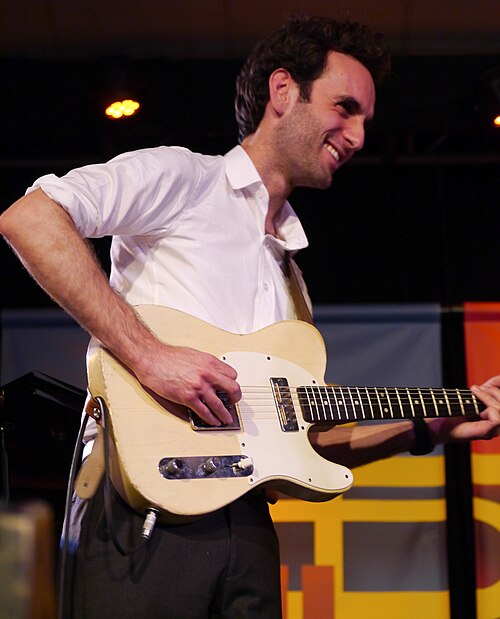
Julian Lage is a jazz musician who plays guitar. Julian Lage was born on 25 December 1987 in Santa Rosa. The music is usually filed under jazz. Record labels: Blue Note and EmArcy Records. The discography here lists 13 albums, from “Sounding Point” (2009) to “Scenes From Above” (2026).
Julian Price Lage ( LAHZH; born December 25, 1987) is an American guitarist and composer. A child prodigy, Lage performed at the 2000 Grammy Awards at age 12, and at 15, became a faculty member of the Stanford Jazz Workshop. He released his debut album, Sounding Point, in 2009 on EmArcy Records. He was signed to Blue Note Records in 2021, with whom he has released the albums Squint (2021), View with a Room (2022), The Layers EP (2023), Speak to Me (2024), and Scenes from Above (2026). Lage currently teaches ensembles and guitar at The New School's School of Jazz and Contemporary Music in New York City and performs in Bob Dylan's touring band.
Read the full article on Wikipedia ↗ · From Wikipedia, the free encyclopedia (CC BY-SA 4.0)
Discography
Studio and live albums
Also plays on
Albums where Julian Lage is credited as a sideman
| 1999 | Dawg Duos — David Grisman |
| 2011 | In the Moonlight — Sophie Milman |
| 2012 | Today Is Tomorrow — Dayna Stephens |
| 2018 | The Book Beri'ah — John Zorn |
| 2018 | Insurrection — John Zorn |
| 2018 | Uplift — Dave Douglas |
| 2020 | Virtue — John Zorn |
| 2021 | Teresa de Ávila — John Zorn |
| 2021 | New Masada Quartet — John Zorn & New Masada Quartet |
| 2022 | New Standards, Vol. 1 — Terri Lyne Carrington, Kris Davis, Linda May Han Oh, Nicholas Payton, Matthew Stevens |
| 2023 | Full Fathom Five — John Zorn |
| 2023 | Multiplicities II: A Repository of Nonexistent Objects — John Zorn & Incerto |
| 2024 | Her Melodious Lay — John Zorn |
| 2024 | New Masada Quartet, Vol. 3 — John Zorn |
| 2024 | All Species Parade — Jenny Scheinman |
| 2026 | Paramount Quartet — Joe Lovano, Julian Lage, Santi Debriano & Will Calhoun |
Listen on Spotify
Frequently asked questions
What instrument does Julian Lage play?
Julian Lage is known for playing guitar.
When and where was Julian Lage born?
Julian Lage was born 25 December 1987 in Santa Rosa.
What are Julian Lage's best-known albums?
Albums in our database include Sounding Point (2009), Gladwell (2011), Avalon (2014), World’s Fair (2015) and Arclight (2016).
External links
- en.wikipedia.org ↗
- de.wikipedia.org ↗
- it.wikipedia.org ↗
- wikidata.org ↗
- musicbrainz.org ↗
- discogs.com ↗
- allmusic.com ↗
- julianlage.com ↗
Data compiled from open sources; see the source links below. Spotted an error? Let us know.