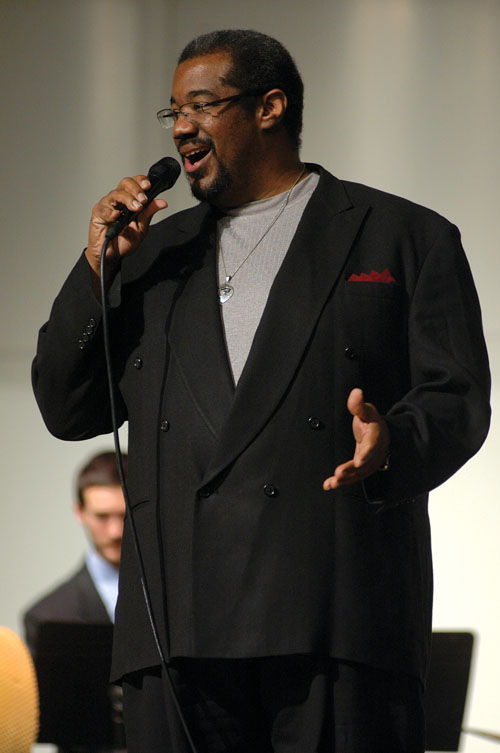
- Born
- 30 July 1958
Kansas City - Died
- 17 December 2017
Kansas City - Country
- United States
- Active
- 1990–2017
- Record labels
- Enja Records, Telarc International Corporation, Warner Records
- Discography
- 11 albums
Biography
Kevin Mahogany was a jazz musician who played voice. Kevin Mahogany was born on 30 July 1958 in Kansas City and died on 17 December 2017 in Kansas City. The music is usually filed under jazz and jazz fusion. Record labels: Enja Records, Telarc International Corporation and Warner Records. The discography here lists 11 albums, from “Double Rainbow” (1993) to “The Vienna Affair” (2015). Honours include Kansas Music Hall of Fame (2020).
Kevin Bryant Mahogany (July 30, 1958 – December 17, 2017) was an American jazz vocalist who became prominent in the 1990s. Particularly known for his scat singing, his singing style has been compared with those of Billy Eckstine, Joe Williams and Johnny Hartman.
Read the full article on Wikipedia ↗ · From Wikipedia, the free encyclopedia (CC BY-SA 4.0)
Discography
Studio and live albums
Also plays on
Albums where Kevin Mahogany is credited as a sideman
| 1993 | It Don't Mean a Thing — Elvin Jones |
| 1996 | Dangerous — Marlena Shaw |
| 1999 | Visit Me — Barbara Morrison |
Awards
Frequently asked questions
What instrument did Kevin Mahogany play?
Kevin Mahogany is known for playing voice.
When and where was Kevin Mahogany born?
Kevin Mahogany was born 30 July 1958 in Kansas City.
What are Kevin Mahogany's best-known albums?
Albums in our database include Double Rainbow (1993), Songs and Moments (1994), You Got What It Takes (1995), Kevin Mahogany (1996) and Another Time Another Place (1997).
External links
Data compiled from open sources; see the source links below. Spotted an error? Let us know.