Guitarists · b. 1968
Kyle Eastwood
American jazz bassist and composer
- Born
- 19 May 1968
Los Angeles - Country
- United States
- Active
- 1990–
- Record labels
- Columbia Records
- Discography
- 15 albums
Biography
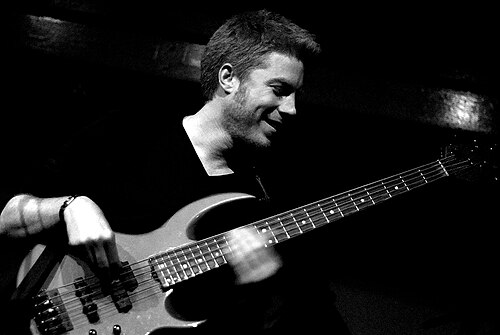
Kyle Eastwood is a jazz musician who plays guitar, double bass and bass guitar. Kyle Eastwood was born on 19 May 1968 in Los Angeles. The music is usually filed under jazz. Record labels: Columbia Records. The discography here lists 15 albums, from “From There To Here” (1998) to “Eastwood Symphonic” (2023).
Kyle Eastwood (born May 19, 1968) is an American jazz bassist, film composer and actor. He studied film at the University of Southern California for two years before embarking on a music career. After becoming a session player in the early 1990s and leading his own quartet, he released his first solo album, From There to Here, in 1998. His album The View from Here was released in 2013 by Jazz Village. In addition to his solo albums, Eastwood has composed music for nine of his father Clint Eastwood's films. Eastwood plays fretted and fretless electric bass guitar and double bass.
Read the full article on Wikipedia ↗ · From Wikipedia, the free encyclopedia (CC BY-SA 4.0)
Discography
Studio and live albums
Frequently asked questions
What instrument does Kyle Eastwood play?
Kyle Eastwood is known for playing guitar, double bass and bass guitar.
When and where was Kyle Eastwood born?
Kyle Eastwood was born 19 May 1968 in Los Angeles.
What are Kyle Eastwood's best-known albums?
Albums in our database include From There To Here (1998), Paris Blue (2005), Letters from Iwo Jima (2006), Now (2006) and Rails & Ties (2007).
External links
- en.wikipedia.org ↗
- de.wikipedia.org ↗
- it.wikipedia.org ↗
- wikidata.org ↗
- musicbrainz.org ↗
- discogs.com ↗
- allmusic.com ↗
- kyleeastwood.com ↗
Data compiled from open sources; see the source links below. Spotted an error? Let us know.