- Born
- 1969
Toronto - Country
- Canada
- Record labels
- Atlantic Records, Arista Records
- Discography
- 8 albums
Biography
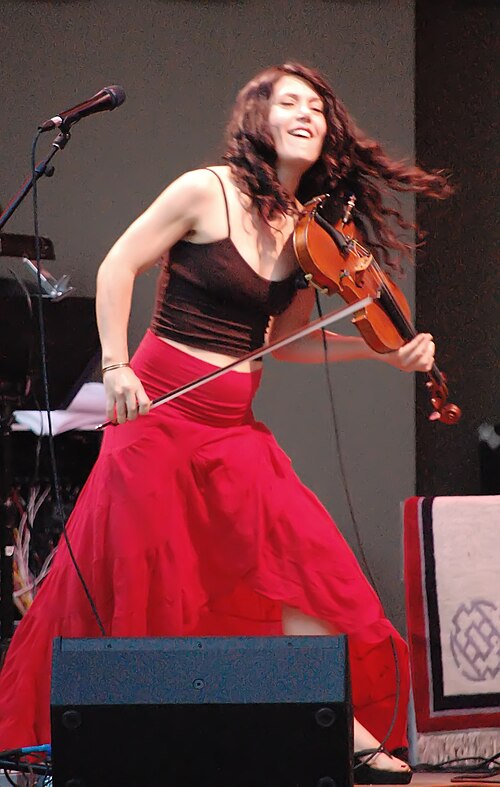
Lili Haydn is a jazz musician who plays violin, viola and voice. Lili Haydn was born in 1969 in Toronto. The music is usually filed under classical music and jazz-funk. Record labels: Atlantic Records and Arista Records. The discography here lists 8 albums, from “Lili” (1997) to “Lullabies for the Brokenhearted” (2025).
Lili Haydn is a Canadian-born violinist, film and TV composer, singer-songwriter, and former child actor. She won a Grammy Award in 2019 for Opium Moon and was nominated for an Emmy Award for "Outstanding Original Music And Lyrics" in the TV series, Ginny & Georgia in 2023. In 2025, she was nominated for a Grammy Award for Lullabies For The Brokenhearted for Best Chamber Music/Small Ensemble Performance. As a solo artist she has released four albums. She was the opening act for Jimmy Page and Robert Plant, Sting, and George Clinton and The P-Funk Allstars and has collaborated with Roger Waters, Hans Zimmer, Josh Groban, Herbie Hancock, B. B. King, Seal, Nusrat Fateh Ali Khan, Los Angeles Philharmonic, and others.
Read the full article on Wikipedia ↗ · From Wikipedia, the free encyclopedia (CC BY-SA 4.0)
Discography
Studio and live albums
Listen on Spotify
Frequently asked questions
What instrument does Lili Haydn play?
Lili Haydn is known for playing violin, viola and voice.
When and where was Lili Haydn born?
Lili Haydn was born 1969 in Toronto.
What are Lili Haydn's best-known albums?
Albums in our database include Lili (1997), Light Blue Sun (2003), Place Between Places (2008), Lililand (2014) and Evocations (2015).
External links
- en.wikipedia.org ↗
- de.wikipedia.org ↗
- wikidata.org ↗
- musicbrainz.org ↗
- discogs.com ↗
- allmusic.com ↗
- lilihaydn.com ↗
Data compiled from open sources; see the source links below. Spotted an error? Let us know.