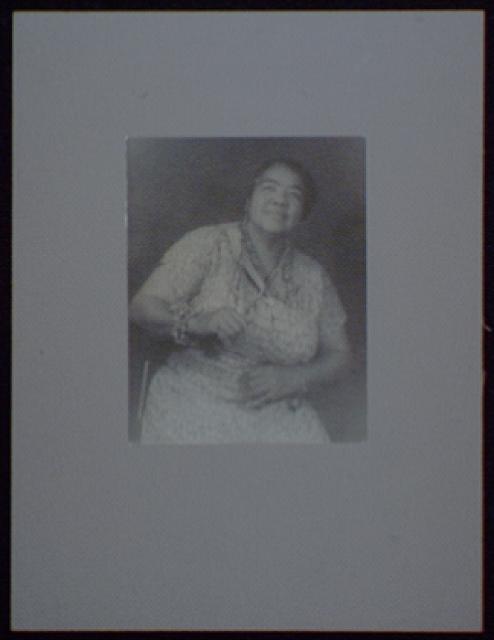
- Born
- 1895
New Orleans - Died
- 1963
New Orleans - Country
- United States
- Record labels
- OKeh Records
- Discography
- 5 albums
Biography
Lizzie Miles was a jazz musician who played voice. Lizzie Miles was born in 1895 in New Orleans and died in 1963 in New Orleans. The music is usually filed under blues. Record labels: OKeh Records. The discography here lists 5 albums, from “Hot Songs My Mother Taught Me” (1956) to “Hot Songs My Mother Taught Me” (2006).
Elizabeth Mary Landreaux (March 31, 1895 – March 17, 1963), known by the stage name Lizzie Miles, was an Afro-Creole blues singer in the United States.
Read the full article on Wikipedia ↗ · From Wikipedia, the free encyclopedia (CC BY-SA 4.0)
Discography
Studio and live albums
Historic 78 rpm records
- ACE IN THE HOLE LIZZIE MILES and her NEW ORLEANS BOYS · Dempsey and Mitchell · Fred… archive.org ↗
- BASIN STREET BLUES LIZZIE MILES and her NEW ORLEANS BOYS · Spencer Williams · Fred… archive.org ↗
- CARELESS LOVE LIZZIE MILES and her NEW ORLEANS BOYS · Fred Neumann · Joe Loyocano… · 1946 archive.org ↗
- I CRIED FOR YOU LIZZIE MILES and her NEW ORLEANS BOYS · Freed · Arnheim · Lyman ·… · 1946 archive.org ↗
Frequently asked questions
What instrument did Lizzie Miles play?
Lizzie Miles is known for playing voice.
When and where was Lizzie Miles born?
Lizzie Miles was born 1895 in New Orleans.
What are Lizzie Miles's best-known albums?
Albums in our database include Hot Songs My Mother Taught Me (1956), Moans and Blues (1956), Torchy Lullabies My Mother Sang Me (1956) and Live at Club Hangover (1983).
External links
Data compiled from open sources; see the source links below. Spotted an error? Let us know.