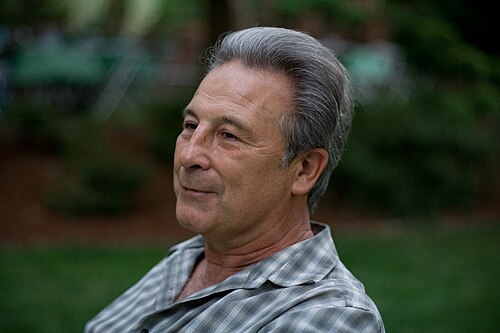
- Born
- 28 February 1930
Berlin - Country
- Germany
- Active
- 1950–
- Record labels
- Jazzology Records
- Discography
- 13 albums
Biography
Marty Grosz is a jazz musician who plays banjo and voice. Marty Grosz was born on 28 February 1930 in Berlin. The music is usually filed under jazz. Record labels: Jazzology Records. The discography here lists 13 albums, from “Marty Grosz And The Keepers Of The Flame (And The Imps)” (1987) to “Diga Diga Doo” (2015).
Martin Oliver Grosz (born February 28, 1930) is a German-born American jazz guitarist, banjoist, vocalist, and composer born in Berlin, Germany, the son of artist George Grosz. He performed with Bob Wilber and wrote arrangements for him. He has also worked with Kenny Davern, Dick Sudhalter, and Keith Ingham. Marty Grosz is influenced by the Jazz guitarists of the 1930s, particularly Carl Kress, and uses a lower Banjo derived tuning for his guitar similar to that used by Kress. This produces a much more robust sound for both rhythm playing and chord solo breaks. Grosz is also known as a witty raconteur often introducing songs with long amusing anecdotes.
Read the full article on Wikipedia ↗ · From Wikipedia, the free encyclopedia (CC BY-SA 4.0)
Discography
Studio and live albums
Also plays on
Albums where Marty Grosz is credited as a sideman
Frequently asked questions
What instrument does Marty Grosz play?
Marty Grosz is known for playing banjo and voice.
When and where was Marty Grosz born?
Marty Grosz was born 28 February 1930 in Berlin.
What are Marty Grosz's best-known albums?
Albums in our database include Marty Grosz And The Keepers Of The Flame (And The Imps) (1987), Unsaturated Fats (1991), Donaldson Redux (1992), Just Imagine (1994) and Keep a Song in Your Soul (1994).
External links
Data compiled from open sources; see the source links below. Spotted an error? Let us know.