- Born
- 17 July 1921
Minot - Died
- 3 April 1992
Bakersfield - Country
- United States
- Discography
- 2 albums
Biography
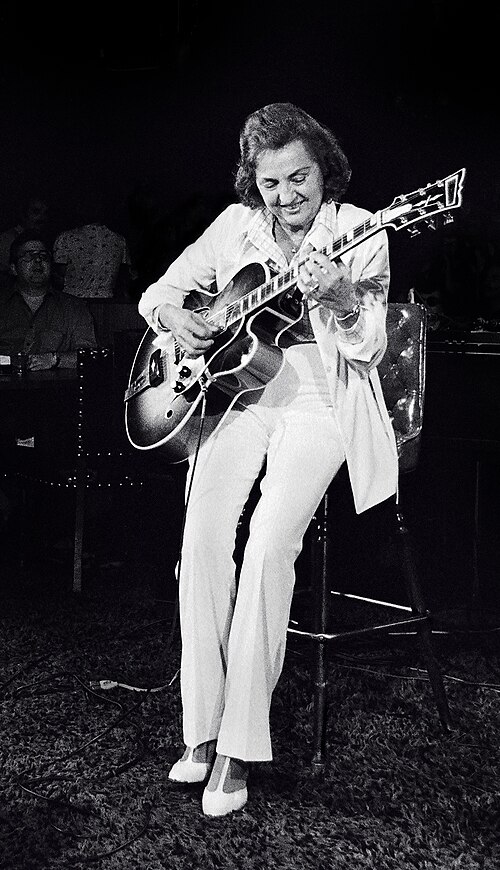
Mary Osborne was a jazz musician who played guitar and voice. Mary Osborne was born on 17 July 1921 in Minot and died on 3 April 1992 in Bakersfield. The music is usually filed under jazz.
Mary Osborne (July 17, 1921 – March 4, 1992) was an American jazz guitarist. She began performing at a young age and was featured on a radio program in North Dakota, where she grew up. In New York City during the 1940s, she played with jazz musicians such as Dizzy Gillespie, Billie Holiday, Art Tatum, Coleman Hawkins, and Thelonious Monk. After moving to California in 1968, she and her husband founded the Osborne Guitar Company.
Read the full article on Wikipedia ↗ · From Wikipedia, the free encyclopedia (CC BY-SA 4.0)
Discography
Studio and live albums
Historic 78 rpm records
- Oops My Lady Mary Osborne Trio · Mary Osborne · 1946 archive.org ↗
- What to Do Mary Osborne Trio · Mary Osborne · Osborne · Robbins · 1946 archive.org ↗
Frequently asked questions
What instrument did Mary Osborne play?
Mary Osborne is known for playing guitar and voice.
When and where was Mary Osborne born?
Mary Osborne was born 17 July 1921 in Minot.
External links
Data compiled from open sources; see the source links below. Spotted an error? Let us know.