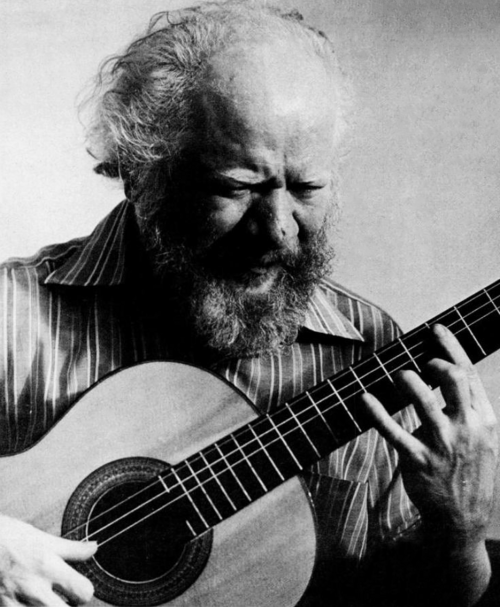
- Born
- 26 May 1930
Itabaiana - Died
- 14 December 2006
João Pessoa - Country
- Brazil
- Discography
- 19 albums
Biography
Sivuca was a jazz musician who played accordion. Sivuca was born on 26 May 1930 in Itabaiana and died on 14 December 2006 in João Pessoa. The music is usually filed under forró. The discography here lists 19 albums, from “Eis Sivuca” (1956) to “Terra Esperança” (2007).
Severino Dias de Oliveira (May 26, 1930 – December 14, 2006), known professionally as Sivuca, was a Brazilian accordionist, guitarist and singer. In addition to his home state of Paraíba, Brazil, and cities Recife and Rio de Janeiro, he worked and lived in Paris, Lisbon, and New York City intermittently. He has two daughters, Wilma Da Silva and Flavia de Oliveira Barreto. He worked with Scandinavian jazz musicians in the 1980s. His most famous songs are "João e Maria" with lyrics by Chico Buarque and "Feira de Mangaio", named after the artisan markets of northeast Brazil. He used makeshift instruments alongside conventional ones and combined traditional regional styles such as forró and choro with jazz, bossa nova, and classical music. Sivuca and Hermeto Pascoal, both versatile multi-instrumentalists with albinism, worked together and are sometimes confused with each other.
Read the full article on Wikipedia ↗ · From Wikipedia, the free encyclopedia (CC BY-SA 4.0)
Discography
Studio and live albums
Also plays on
Albums where Sivuca is credited as a sideman
| 1968 | Popcorn — Luiz Henrique, Walter Wanderley |
| 1985 | Rio de Janeiro Blue — Sylvia Vrethammar |
| 2001 | Pedaço de mim — Chico Buarque |
Frequently asked questions
What instrument did Sivuca play?
Sivuca is known for playing accordion.
When and where was Sivuca born?
Sivuca was born 26 May 1930 in Itabaiana.
What are Sivuca's best-known albums?
Albums in our database include Eis Sivuca (1956), Samba “Nouvelle Vague” (1963), Sivuca (1973), Gravado ao Vivo (1977) and Sivuca (1978).
External links
- en.wikipedia.org ↗
- de.wikipedia.org ↗
- it.wikipedia.org ↗
- wikidata.org ↗
- musicbrainz.org ↗
- discogs.com ↗
- allmusic.com ↗
Data compiled from open sources; see the source links below. Spotted an error? Let us know.