- Born
- 14 October 1958
Ängelholm - Country
- Sweden
- Discography
- 1 album
Biography
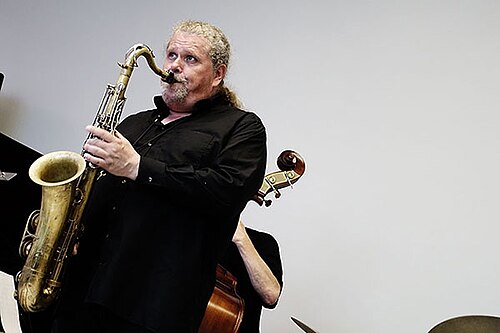
Tomas Franck is a jazz musician who plays saxophone. Tomas Franck was born on 14 October 1958 in Ängelholm. The music is usually filed under jazz.
Tomas Bengt Erik Franck (born October 14, 1958 in Ängelholm) is a Swedish jazz tenor saxophonist. Franck was raised in the town of Helsingborg, where he took up clarinet as a youth, switching to tenor sax in his teens. He studied at the Musik-högskolan in Malmö in the early 1980s, where he formed a group called Equinox and performed with Peps Persson; starting in 1982, he began playing with Fredrik Norén, an association that would last until 1986. In the 1990s he worked with the Radioens Big Band and was the recipient of the Ben Webster Prize in 1991. Franck has performed and recorded extensively as a sideman with, among others, Nikolaj Bent-zon, Ben Besiakov, Thomas Blachman, Thomas Clausen, Carsten Dahl, Niels Lan Doky, Billy Drummond, Al Foster, Lennart Ginman, Roy Haynes, Kirk Lightsey, Doug Raney, and Jens Winther.
Read the full article on Wikipedia ↗ · From Wikipedia, the free encyclopedia (CC BY-SA 4.0)
Discography
Studio and live albums
Frequently asked questions
What instrument does Tomas Franck play?
Tomas Franck is known for playing saxophone.
When and where was Tomas Franck born?
Tomas Franck was born 14 October 1958 in Ängelholm.
External links
Data compiled from open sources; see the source links below. Spotted an error? Let us know.