free improvisation
free improvisation: what it is, how it sounds and 13 musicians associated with it.
Free improvisation (also known as free-form music) is a form of improvised music centered on a commitment to non-idiomatic musical expression. It developed through free jazz, serialism and indeterminacy, and is characterized by a general rejection of formal music theory and tonality, instead following the intuition of its performers and the exploration of dynamic, timbre and texture. The term can refer to both a technique—employed by any musician in any genre—and as a recognizable genre of experimental music in its own right. Free improvisation, as a genre of music, developed primarily in the U.K. as well as the U.S. and Europe in the mid to late 1960s, largely as an outgrowth of free jazz and contemporary classical music.
Read the full article on Wikipedia ↗ · From Wikipedia, the free encyclopedia (CC BY-SA 4.0)
free improvisation musicians
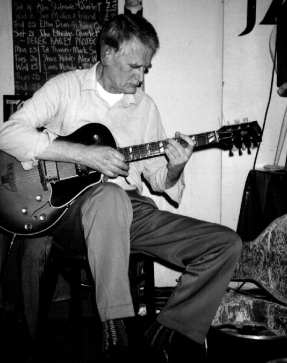 Derek Bailey
1930–2005 · British guitarist (1930–2005)
 Henry Kaiser
b. 1952 · American guitarist, film director, and scientific diver
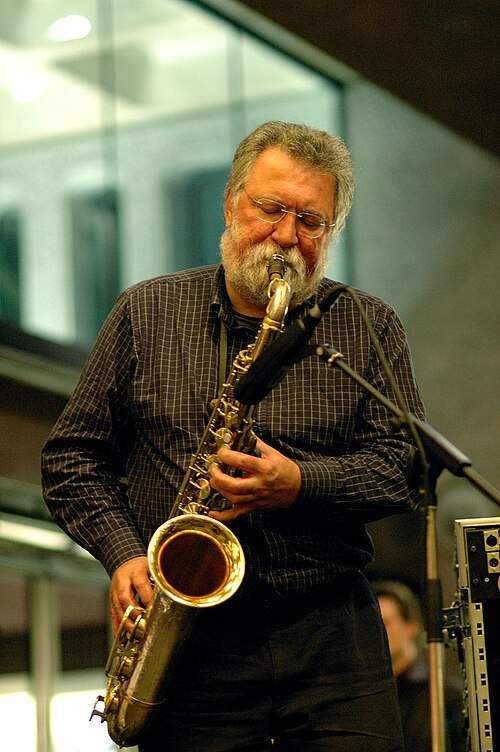 Evan Parker
b. 1944 · English saxophonist
 Irène Schweizer
1941–2024 · Swiss jazz pianist (1941–2024)
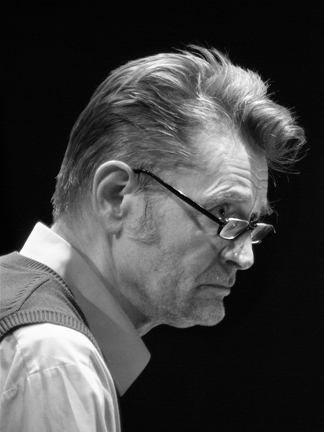 Alexander von Schlippenbach
b. 1938 · German jazz pianist and composer
 Keith Rowe
b. 1940 · British artist
 Phil Wachsmann
b. 1944 · Ugandan musician
 Bobo Stenson
b. 1944 · Swedish jazz pianist
 Tony Oxley
1938–2023 · British drummer (1938–2023)
 Supersilent
1997– · Norwegian musical group; avant-garde band
 Alfred 23 Harth
b. 1949 · German musician and composer
 Alan Silva
b. 1939 · American musician
 Urs Leimgruber
b. 1952 · Swiss saxophonist
Latest posts
- Evaluating Jazz Syncopation Sources and Rhythmic Analysis
- Instruments of Bossa Nova Essential Tools for the Sound
- Why Is Improv Important in Jazz and How It Defines the Genre
- How to Memorize Jazz Standards Efficiently
- What Is the Most Well-Known Jazz Standard and Why It Wins
- What Does the ø Symbol Mean in Jazz Theory
- Examples of Bebop Jazz and Essential Listening Tracks
- What Is a Basic Drumming Pattern Called and How It Works
- How to Ear Train Effectively for Better Musicianship
- How to Notate a Tritone Substitution in Jazz Charts