music of Latin America
music of Latin America: what it is, how it sounds and 10 musicians associated with it.
The music of Latin America refers to music originating from Latin America, namely the Spanish and Portuguese-speaking regions of the Americas south of the United States. Latin American music's origins are a mix of the music of the region's indigenous peoples with the musical traditions brought to the region by European colonists and African slaves. Due to its highly syncretic nature, Latin American music encompasses a wide variety of styles, including influential genres such as cumbia, bachata, bossa nova, merengue, rumba, salsa, samba, son, candombe and tango. During the 20th century, many styles were influenced by the music of the United States giving rise to genres such as Latin pop, rock, jazz, hip hop, and reggaeton. Geographically, it usually refers to the Spanish and Portuguese-speaking regions of Latin America, but sometimes includes Francophone countries and territories of the Caribbean and South America as well.
Read the full article on Wikipedia ↗ · From Wikipedia, the free encyclopedia (CC BY-SA 4.0)
music of Latin America musicians
 Angelique Kidjo
b. 1960 · Beninese-French world music singer (born 1960)
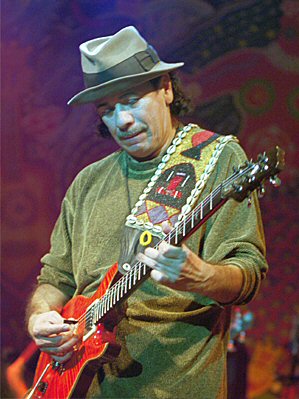 Carlos Santana
b. 1947 · American guitarist
 Chucho Valdés
b. 1941 · Cuban musician
 Pink Martini
1994– · American pop, jazz and lounge music band
 Cindy Blackman
b. 1959 · American musician
Stanley Black
1913–2002 · British composer (1913-2002)
 Chester Thompson
b. 1948 · American drummer
 Jair Rodrigues
1939–2014 · Brazilian musician and singer (1939–2014)
Ronnie Ross
1933–1991 · Jazz saxophonist (1933–1991)
 Mario Bauzá Cárdenas
1911–1993 · Cuban-American musician, composer, and founder of…
Latest posts
- Evaluating Jazz Syncopation Sources and Rhythmic Analysis
- Instruments of Bossa Nova Essential Tools for the Sound
- Why Is Improv Important in Jazz and How It Defines the Genre
- How to Memorize Jazz Standards Efficiently
- What Is the Most Well-Known Jazz Standard and Why It Wins
- What Does the ø Symbol Mean in Jazz Theory
- Examples of Bebop Jazz and Essential Listening Tracks
- What Is a Basic Drumming Pattern Called and How It Works
- How to Ear Train Effectively for Better Musicianship
- How to Notate a Tritone Substitution in Jazz Charts