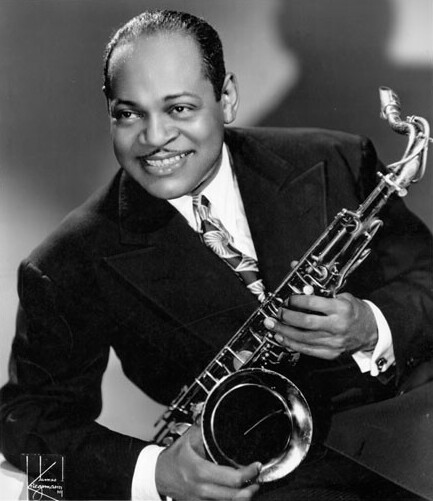
assolo di Tenor saxophone · 1954
Coleman Hawkins: Stompin' at the Savoy
- Tonalità
- Re♭ maggiore
- Tempo
- 250 BPM UP
- Feel ritmico
- Swing
- Stile
- Swing
- Chorus
- 2
- Forma
- A16B8A8
L'assolo di Coleman Hawkins su «Stompin' at the Savoy» conta 346 note in 62 secondi (5.6 note al secondo) e un'estensione di 24 semitoni, da C#3 a C#5. Il tempo medio è di 250 BPM (swing). Circa il 56% del movimento melodico è per grado congiunto (uno o due semitoni).
Note
346Note
62sDurata dell'assolo
5.6Note al secondo
C#3–C#5Estensione (24 semitoni)
56%Moto congiunto
Distribuzione delle classi di altezza
C
C♯
D
E♭
E
F
F♯
G
A♭
A
B♭
B
Intervalli più frequenti
- +1 ×71
- -2 ×46
- -3 ×43
- -1 ×41
- +2 ×34
- +3 ×28
Giro armonico
A1
A2
B1
A3
Disco
- Disco
- Dear Old Southland · Membran Music Ltd. · 2005
- Registrato
- 1954
- Formazione
- Billy Taylor (p); Emmett Berry (tp); Eddie Bert (tb); Milt Hinton (b); Jo Jones (dr); Coleman Hawkins (ts)
- Compositore
- Goodman, Webb, Samson
- Durata dell'assolo
- 00:37-01:41
Fonte: Weimar Jazz Database, Jazzomat Research Project (HfM Weimar), ODbL 1.0.