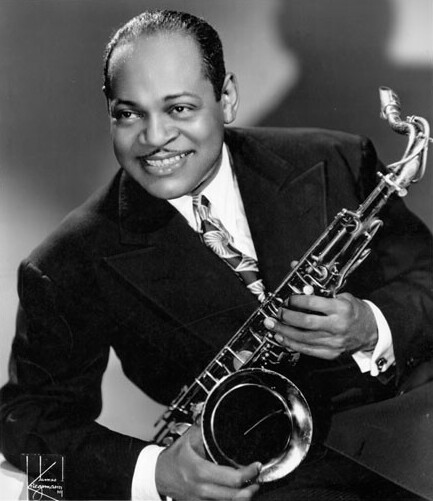
Tenor saxophone-Solo · 1954
Coleman Hawkins: Stompin' at the Savoy
- Tonart
- Des-Dur
- Tempo
- 250 BPM UP
- Rhythmusgefühl
- Swing
- Stil
- Swing
- Chorusse
- 2
- Form
- A16B8A8
Coleman Hawkinss Solo über „Stompin' at the Savoy“ umfasst 346 Töne in 62 Sekunden (5.6 Töne pro Sekunde) und einen Tonumfang von 24 Halbtönen (C#3 bis C#5). Das Durchschnittstempo liegt bei 250 BPM (swing). Rund 56 % der Melodiebewegung verläuft schrittweise (ein bis zwei Halbtöne).
Töne
346Töne
62sSololänge
5.6Töne pro Sekunde
C#3–C#5Tonumfang (24 Halbtöne)
56%Schrittweise Bewegung
Verteilung der Tonklassen
C
C♯
D
E♭
E
F
F♯
G
A♭
A
B♭
B
Häufigste Intervalle
- +1 ×71
- -2 ×46
- -3 ×43
- -1 ×41
- +2 ×34
- +3 ×28
Gespielte Changes
A1
A2
B1
A3
Platte
- Platte
- Dear Old Southland · Membran Music Ltd. · 2005
- Aufgenommen
- 1954
- Besetzung
- Billy Taylor (p); Emmett Berry (tp); Eddie Bert (tb); Milt Hinton (b); Jo Jones (dr); Coleman Hawkins (ts)
- Komponist
- Goodman, Webb, Samson
- Sololänge
- 00:37-01:41
Quelle: Weimar Jazz Database, Jazzomat Research Project (HfM Weimar), ODbL 1.0.