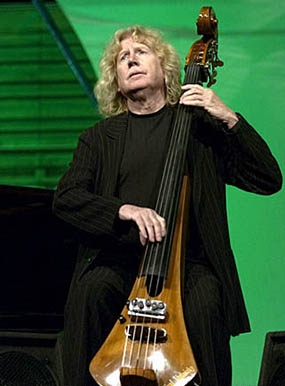
Contrabbassisti · n. 1940
Eberhard Weber
Contrabbassista e compositore tedesco
- contrabbasso
- basso
- violoncello
- contrabbasso elettrico
- jazz
- fusion
- Nascita
- 22 gennaio 1940
Distretto di Hedelfingen - Paese
- Germania
- Attività
- 1962–
- Etichette
- Editions of Contemporary Music
- Discografia
- 15 album
Biografia
Eberhard Weber è un musicista jazz (contrabbasso, basso, violoncello e contrabbasso elettrico). Nato il 22 gennaio 1940 a Distretto di Hedelfingen. Lo stile è di solito associato a jazz e fusion. Etichette: Editions of Contemporary Music. La discografia qui comprende 15 album, da «Ring» (1974) a «Once Upon A Time (Live in Avignon)» (2021). Tra i riconoscimenti: Jazz-Ehrenpreis Baden-Württemberg (2015) e Croce al merito al nastro dell'Ordine al Merito di Germania.
Eberhard Weber (Stoccarda, 22 gennaio 1940) è un contrabbassista e compositore tedesco. Da esecutore, è riconosciuto come uno dei più virtuosi ed originali jazzisti, apprezzato per il suo tono e fraseggio. Le sue composizioni musicali sono di difficile collocazione stilistica, essendo un ibrido ricco di rimandi al chamber jazz, alla musica classica europea, a quella minimalista e all'ambient music, e sono considerate un grande esempio del sound dell'etichetta discografica ECM.
Leggi la voce completa su Wikipedia ↗ · Da Wikipedia, l'enciclopedia libera (CC BY-SA 4.0)
Discografia
Album in studio e dal vivo
Suona anche in
Album in cui Eberhard Weber compare come sideman
Premi
Ascolta su Spotify
Domande frequenti
Che strumento suona Eberhard Weber?
Eberhard Weber è noto per contrabbasso, basso, violoncello e contrabbasso elettrico.
Quando e dove è nato Eberhard Weber?
Eberhard Weber è nato 22 gennaio 1940 a Distretto di Hedelfingen.
Quali sono gli album più noti di Eberhard Weber?
Nel nostro archivio ci sono, tra gli altri, Ring (1974), The Colours of Chloë (1974), Yellow Fields (1976), Passengers (1977) e The Following Morning (1977).
Collegamenti esterni
- en.wikipedia.org ↗
- de.wikipedia.org ↗
- it.wikipedia.org ↗
- wikidata.org ↗
- musicbrainz.org ↗
- discogs.com ↗
- allmusic.com ↗
- ecmrecords.com ↗
Dati raccolti da fonti aperte; vedi i riferimenti qui sotto. Hai trovato un errore? Scrivici.