- Nascita
- 28 settembre 1931
Summit - Morte
- 29 agosto 1995
Filadelfia - Paese
- Stati Uniti
- Attività
- 1952–
- Etichette
- Blue Note
- Discografia
- 1 album
Biografia
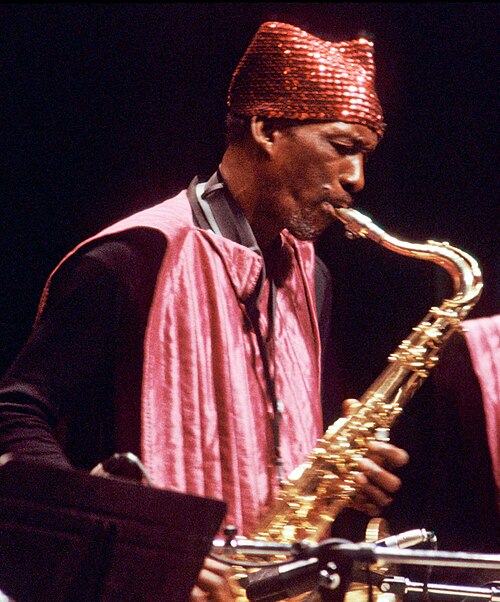
John Gilmore è stato un musicista jazz (sassofono). Nato il 28 settembre 1931 a Summit, morto il 29 agosto 1995 a Filadelfia. Lo stile è di solito associato a jazz. Etichette: Blue Note.
John Gilmore (Summit, 28 settembre 1931 – Filadelfia, 19 agosto 1995) è stato un sassofonista jazz statunitense, noto soprattutto per la sua attività nel movimento free jazz, e per la sua pluridecennale militanza con la Sun Ra Arkestra.
Leggi la voce completa su Wikipedia ↗ · Da Wikipedia, l'enciclopedia libera (CC BY-SA 4.0)
Discografia
Album in studio e dal vivo
Suona anche in
Album in cui John Gilmore compare come sideman
| 1957 | Jazz by Sun Ra — Sun Ra |
| 1957 | Blowing in From Chicago — Cliff Jordan & John Gilmore |
| 1963 | The Artistry of Freddie Hubbard — Freddie Hubbard |
| 1964 | Today and Tomorrow — McCoy Tyner |
| 1965 | The Heliocentric Worlds of Sun Ra, Volume 1 — Sun Ra |
| 1967 | Compulsion — Andrew Hill |
| 1967 | Turkish Women at the Bath — Pete La Roca |
| 1968 | Andrew!!! — Andrew Hill |
| 1968 | Feeling Blue — Phil Upchurch |
| 1973 | Space Is the Place — Sun Ra |
| 1978 | New Steps — Sun Ra |
| 1979 | Omniverse — Sun Ra |
| 1987 | Turns — Paul Bley |
| 1989 | Blue Delight — Sun Ra |
| 2000 | Standards — Sun Ra |
Domande frequenti
Che strumento suonava John Gilmore?
John Gilmore è noto per sassofono.
Quando e dove è nato John Gilmore?
John Gilmore è nato 28 settembre 1931 a Summit.
Collegamenti esterni
- en.wikipedia.org ↗
- de.wikipedia.org ↗
- it.wikipedia.org ↗
- wikidata.org ↗
- musicbrainz.org ↗
- discogs.com ↗
- allmusic.com ↗
Dati raccolti da fonti aperte; vedi i riferimenti qui sotto. Hai trovato un errore? Scrivici.