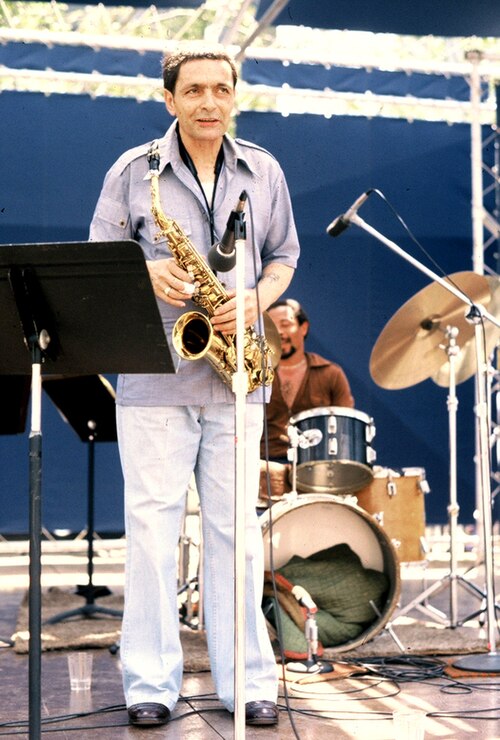
Clarinet-Solo · 1979
Art Pepper: In a Mellow Tone
- Tonart
- Es-Dur
- Tempo
- 168 BPM MEDIUM UP
- Rhythmusgefühl
- Swing
- Stil
- Cool
- Chorusse
- 4
- Form
- A16B16
Art Peppers Solo über „In a Mellow Tone“ umfasst 565 Töne in 183 Sekunden (3.1 Töne pro Sekunde) und einen Tonumfang von 41 Halbtönen (D3 bis G6). Das Durchschnittstempo liegt bei 168 BPM (swing). Rund 46 % der Melodiebewegung verläuft schrittweise (ein bis zwei Halbtöne).
Töne
565Töne
183sSololänge
3.1Töne pro Sekunde
D3–G6Tonumfang (41 Halbtöne)
46%Schrittweise Bewegung
Verteilung der Tonklassen
C
C♯
D
E♭
E
F
F♯
G
A♭
A
B♭
B
Häufigste Intervalle
- -2 ×94
- +3 ×82
- +1 ×66
- +2 ×55
- -3 ×53
- -1 ×44
Gespielte Changes
A1
B1
Platte
- Platte
- Art Pepper, The Compelete Galaxy Recordings, CD 4 · Galaxy Records · 1989
- Aufgenommen
- 25 - 26. 05.1979
- Besetzung
- Art Pepper (as, cl); Charlie Haden (b); Billy Higgins (dr)
- Komponist
- Duke Ellington
- Sololänge
- 01:00-04:03
Quelle: Weimar Jazz Database, Jazzomat Research Project (HfM Weimar), ODbL 1.0.