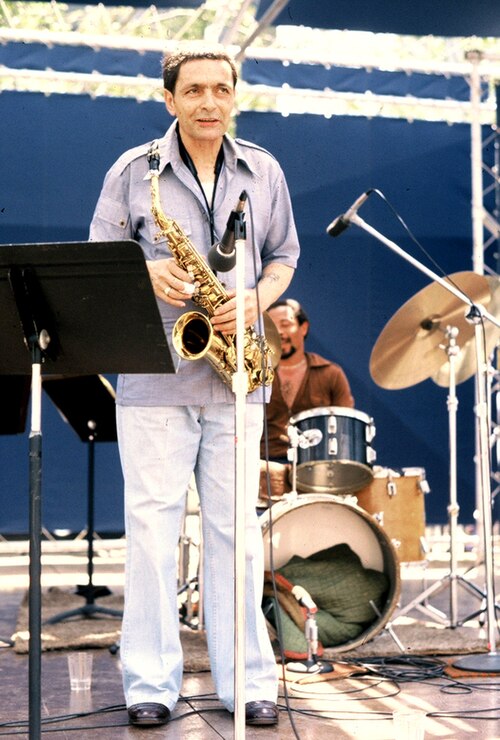
Alto saxophone-Solo · 1979
Art Pepper: Stardust
- Tonart
- Es-Dur
- Tempo
- 61 BPM SLOW
- Rhythmusgefühl
- Ballad
- Stil
- Cool
- Chorusse
- 2
- Form
- A16B16
Art Peppers Solo über „Stardust“ umfasst 591 Töne in 255 Sekunden (2.3 Töne pro Sekunde) und einen Tonumfang von 34 Halbtönen (D3 bis C6). Das Durchschnittstempo liegt bei 61 BPM (ballad). Rund 54 % der Melodiebewegung verläuft schrittweise (ein bis zwei Halbtöne).
Töne
591Töne
255sSololänge
2.3Töne pro Sekunde
D3–C6Tonumfang (34 Halbtöne)
54%Schrittweise Bewegung
Verteilung der Tonklassen
C
C♯
D
E♭
E
F
F♯
G
A♭
A
B♭
B
Häufigste Intervalle
- -2 ×99
- +2 ×94
- +1 ×64
- -1 ×59
- +3 ×57
- -3 ×45
Gespielte Changes
A1
B1
Platte
- Platte
- Art Pepper, The Compelete Galaxy Recordings, CD 3 · Galaxy Records · 1989
- Aufgenommen
- 25 - 26. 05.1979
- Besetzung
- Art Pepper (as, cl); George Cables (p); Charlie Haden (b); Billy Higgins (dr)
- Komponist
- Parish, Carmichael
- Sololänge
- 00:15-04:32
Quelle: Weimar Jazz Database, Jazzomat Research Project (HfM Weimar), ODbL 1.0.