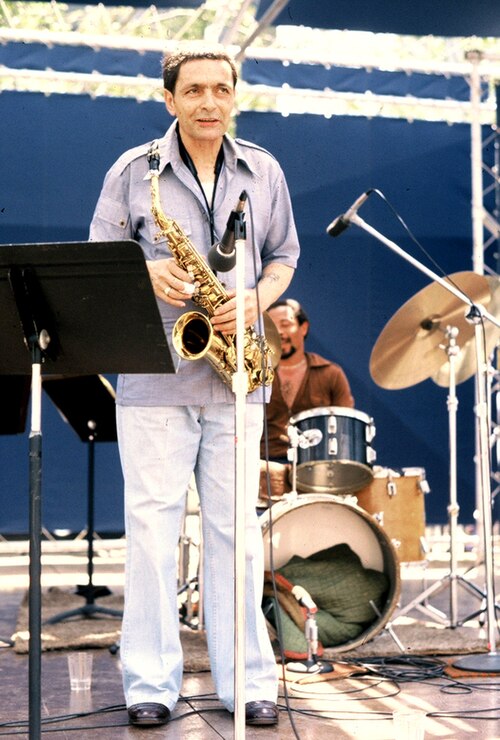
Alto saxophone-Solo · 1979
Art Pepper: Stardust
- Tonart
- Es-Dur
- Tempo
- 60 BPM SLOW
- Rhythmusgefühl
- Ballad
- Stil
- Cool
- Chorusse
- 1
- Form
- A16B16
Art Peppers Solo über „Stardust“ umfasst 909 Töne in 290 Sekunden (3.1 Töne pro Sekunde) und einen Tonumfang von 38 Halbtönen (C#3 bis Eb6). Das Durchschnittstempo liegt bei 60 BPM (ballad). Rund 57 % der Melodiebewegung verläuft schrittweise (ein bis zwei Halbtöne).
Töne
909Töne
290sSololänge
3.1Töne pro Sekunde
C#3–Eb6Tonumfang (38 Halbtöne)
57%Schrittweise Bewegung
Verteilung der Tonklassen
C
C♯
D
E♭
E
F
F♯
G
A♭
A
B♭
B
Häufigste Intervalle
- -2 ×192
- +2 ×180
- +3 ×100
- -1 ×79
- -3 ×75
- +1 ×66
Gespielte Changes
B1
C1
Platte
- Platte
- Art Pepper, The Compelete Galaxy Recordings, CD 3 · Galaxy Records · 1989
- Aufgenommen
- 25 - 26. 05.1979
- Besetzung
- Art Pepper (as, cl); George Cables (p); Charlie Haden (b); Billy Higgins (dr)
- Komponist
- Parish, Carmichael
- Sololänge
- 05:31-10:21
Quelle: Weimar Jazz Database, Jazzomat Research Project (HfM Weimar), ODbL 1.0.