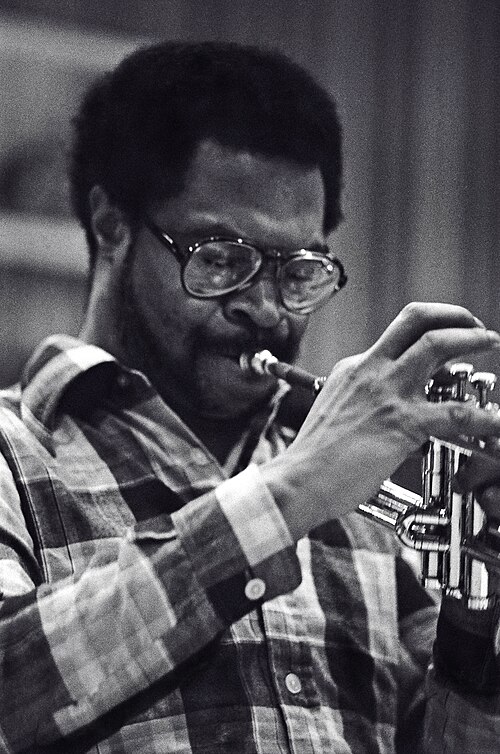
Trumpet-Solo · 1987
Woody Shaw: If I Were a Bell
- Tonart
- F-Dur
- Tempo
- 252 BPM UP
- Rhythmusgefühl
- Swing
- Stil
- Postbop
- Chorusse
- 2
- Form
- A16B16
Woody Shaws Solo über „If I Were a Bell“ umfasst 306 Töne in 61 Sekunden (5 Töne pro Sekunde) und einen Tonumfang von 26 Halbtönen (A3 bis B5). Das Durchschnittstempo liegt bei 252 BPM (swing). Rund 70 % der Melodiebewegung verläuft schrittweise (ein bis zwei Halbtöne).
Töne
306Töne
61sSololänge
5Töne pro Sekunde
A3–B5Tonumfang (26 Halbtöne)
70%Schrittweise Bewegung
Verteilung der Tonklassen
C
C♯
D
E♭
E
F
F♯
G
A♭
A
B♭
B
Häufigste Intervalle
- -1 ×61
- -2 ×57
- +2 ×55
- +1 ×42
- +3 ×23
- -3 ×20
Gespielte Changes
A1
B1
A2
B2
Platte
- Platte
- Imagination · 32 Jazz · 1998
- Aufgenommen
- 1987-06-24
- Besetzung
- Kirk Lightsey (p); Steve Turre (tb); Ray Drummond (b); Carl Allen (dr); Woody Shaw (tp)
- Komponist
- F. Loesser
- Sololänge
- 00:39-01:40
Quelle: Weimar Jazz Database, Jazzomat Research Project (HfM Weimar), ODbL 1.0.