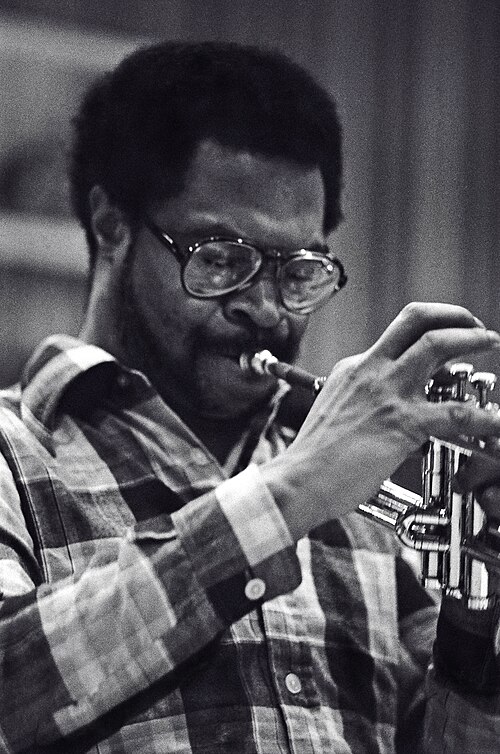
Cornet-Solo · 1978
Woody Shaw: Stepping Stone
- Tonart
- F-Dur
- Tempo
- 266 BPM UP
- Rhythmusgefühl
- Swing
- Stil
- Postbop
- Chorusse
- 1
- Form
- A16B16
Woody Shaws Solo über „Stepping Stone“ umfasst 160 Töne in 29 Sekunden (5.4 Töne pro Sekunde) und einen Tonumfang von 27 Halbtönen (G3 bis Bb5). Das Durchschnittstempo liegt bei 266 BPM (swing). Rund 52 % der Melodiebewegung verläuft schrittweise (ein bis zwei Halbtöne).
Töne
160Töne
29sSololänge
5.4Töne pro Sekunde
G3–Bb5Tonumfang (27 Halbtöne)
52%Schrittweise Bewegung
Verteilung der Tonklassen
C
C♯
D
E♭
E
F
F♯
G
A♭
A
B♭
B
Häufigste Intervalle
- +2 ×33
- -2 ×22
- -3 ×19
- -1 ×16
- 0 ×14
- +5 ×14
Gespielte Changes
A1
B1
Platte
- Platte
- Stepping Stones: Live at the Village Vanguard · Columbia · 1978
- Aufgenommen
- 05.&06.08.1978
- Besetzung
- Woody Shaw (cor, flgn); Carter Jefferson (ts, ss); Onaje Allan Gumbs (p); Clint Houston (b); Victor Lewis (dr)
- Komponist
- Woody Shaw
- Sololänge
- 00.54-01:25
Quelle: Weimar Jazz Database, Jazzomat Research Project (HfM Weimar), ODbL 1.0.