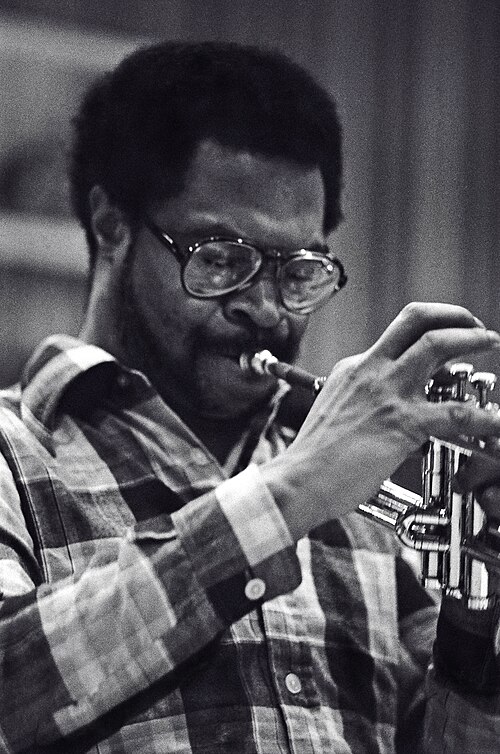
assolo di Cornet · 1978
Woody Shaw: Stepping Stone
- Tonalità
- Fa maggiore
- Tempo
- 266 BPM UP
- Feel ritmico
- Swing
- Stile
- Postbop
- Chorus
- 1
- Forma
- A16B16
L'assolo di Woody Shaw su «Stepping Stone» conta 160 note in 29 secondi (5.4 note al secondo) e un'estensione di 27 semitoni, da G3 a Bb5. Il tempo medio è di 266 BPM (swing). Circa il 52% del movimento melodico è per grado congiunto (uno o due semitoni).
Note
160Note
29sDurata dell'assolo
5.4Note al secondo
G3–Bb5Estensione (27 semitoni)
52%Moto congiunto
Distribuzione delle classi di altezza
C
C♯
D
E♭
E
F
F♯
G
A♭
A
B♭
B
Intervalli più frequenti
- +2 ×33
- -2 ×22
- -3 ×19
- -1 ×16
- 0 ×14
- +5 ×14
Giro armonico
A1
B1
Disco
- Disco
- Stepping Stones: Live at the Village Vanguard · Columbia · 1978
- Registrato
- 05.&06.08.1978
- Formazione
- Woody Shaw (cor, flgn); Carter Jefferson (ts, ss); Onaje Allan Gumbs (p); Clint Houston (b); Victor Lewis (dr)
- Compositore
- Woody Shaw
- Durata dell'assolo
- 00.54-01:25
Fonte: Weimar Jazz Database, Jazzomat Research Project (HfM Weimar), ODbL 1.0.