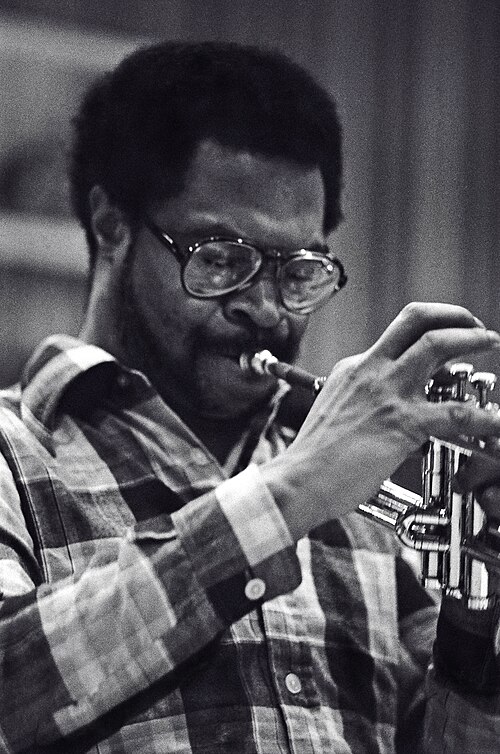
Trumpet-Solo · 1977

Woody Shaw: Rosewood

Tonart
Tempo
172 BPM MEDIUM UP
Rhythmusgefühl
Latin/funk
Stil
Postbop
Chorusse
1
Form
A16B20A16B16

Woody Shaws Solo über „Rosewood“ umfasst 465 Töne in 96 Sekunden (4.9 Töne pro Sekunde) und einen Tonumfang von 32 Halbtönen (F#3 bis D6). Das Durchschnittstempo liegt bei 172 BPM (latin/funk). Rund 49 % der Melodiebewegung verläuft schrittweise (ein bis zwei Halbtöne).

Töne

465Töne
96sSololänge
4.9Töne pro Sekunde
F#3–D6Tonumfang (32 Halbtöne)
49%Schrittweise Bewegung

Verteilung der Tonklassen

Häufigste Intervalle

  • -2 ×97
  • +2 ×69
  • -3 ×57
  • 0 ×42
  • -1 ×34
  • +1 ×28

Gespielte Changes

A1
Gm79Fm79
Gm79Fm79
Cm79B♭m79
G♭79
Gm79Fm79
Gm79Fm79
Cm79B♭m79
G♭maj79
A♭maj79
A♭maj79
A♭m79
D♭79G7911♯
G♭maj79
G♭maj79
B79
Esus79E79
B1
Cm79B♭m79
Cm79B♭m79
G♭maj79Emaj7
Dmaj7911♯
Cm79B♭m79
Cm79B♭m79
G♭maj7Emaj7
Dmaj7911♯
Bsus7Asus7
Bsus7Asus7
Gsus7Fsus7
Gsus7Fsus7
B♭m7
C1
Am7911
Am7911
Am7911A6
A6
A6B♭79
B♭79
B♭6A♭m7
Gsus7A♭sus7
A2
Gm79Fm79
Gm79Fm79
Cm7B♭m7
G♭maj79
Gm79Fm79
Gm79Fm79
Cm79B♭m79
G♭maj79
A♭maj79
A♭maj79
A♭m79
D♭79G7911♯
G♭maj79
G♭maj79
B79
E79
Cm79B♭m79
Cm79B♭79
G♭maj7Emaj7
Dmaj7911♯
Cm79B♭m79
Cm79B♭m79
G♭maj7Emaj7
Emaj7911♯
Csus7A♭sus7
A♭sus7
Csus7A♭sus7
Csus7A♭sus7
A♭sus7
Csus7
A♭sus7
Csus7A♭sus7
I1

Platte

Platte
Rosewood · Columbia (Legacy) · 1998
Aufgenommen
1977-12-15
Besetzung
Woody Shaw (tp, flgn); Joe Henderson (ts); Onaje Allan Gumbs (p); Clint Houston (b); Victor Lewis (dr)
Komponist
Woody Shaw
Sololänge
03:31- 05:08

Quelle: Weimar Jazz Database, Jazzomat Research Project (HfM Weimar), ODbL 1.0.

Latest posts

  1. Evaluating Jazz Syncopation Sources and Rhythmic Analysis
  2. Instruments of Bossa Nova Essential Tools for the Sound
  3. Why Is Improv Important in Jazz and How It Defines the Genre
  4. How to Memorize Jazz Standards Efficiently
  5. What Is the Most Well-Known Jazz Standard and Why It Wins
  6. What Does the ø Symbol Mean in Jazz Theory
  7. Examples of Bebop Jazz and Essential Listening Tracks
  8. What Is a Basic Drumming Pattern Called and How It Works
  9. How to Ear Train Effectively for Better Musicianship
  10. How to Notate a Tritone Substitution in Jazz Charts