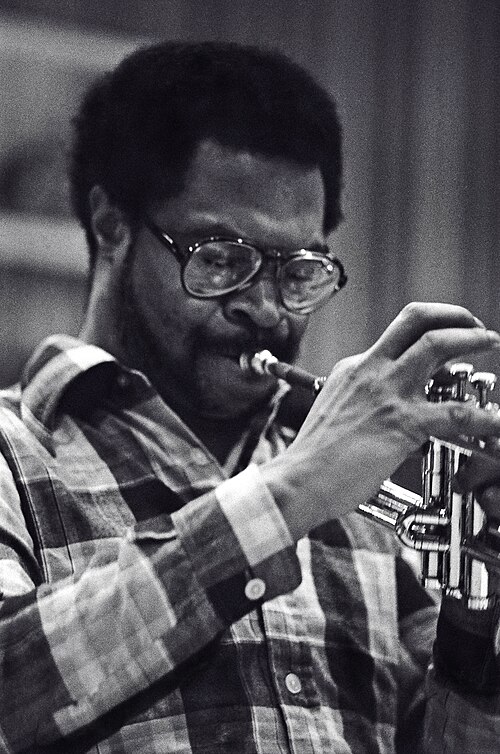
Trumpet solo · 1977

Woody Shaw: Rosewood

Key
Tempo
172 BPM MEDIUM UP
Rhythm feel
Latin/funk
Style
Postbop
Choruses
1
Form
A16B20A16B16

Woody Shaw's solo on “Rosewood” has 465 notes in 96 seconds (4.9 notes per second), spanning 32 semitones from F#3 to D6. The average tempo is 172 BPM with a latin/funk feel. About 49% of the melodic motion is stepwise (one or two semitones).

Notes

465Notes
96sSolo length
4.9Notes per second
F#3–D6Range (32 semitones)
49%Stepwise motion

Pitch-class distribution

Most frequent intervals

  • -2 ×97
  • +2 ×69
  • -3 ×57
  • 0 ×42
  • -1 ×34
  • +1 ×28

Changes played over

A1
Gm79Fm79
Gm79Fm79
Cm79B♭m79
G♭79
Gm79Fm79
Gm79Fm79
Cm79B♭m79
G♭maj79
A♭maj79
A♭maj79
A♭m79
D♭79G7911♯
G♭maj79
G♭maj79
B79
Esus79E79
B1
Cm79B♭m79
Cm79B♭m79
G♭maj79Emaj7
Dmaj7911♯
Cm79B♭m79
Cm79B♭m79
G♭maj7Emaj7
Dmaj7911♯
Bsus7Asus7
Bsus7Asus7
Gsus7Fsus7
Gsus7Fsus7
B♭m7
C1
Am7911
Am7911
Am7911A6
A6
A6B♭79
B♭79
B♭6A♭m7
Gsus7A♭sus7
A2
Gm79Fm79
Gm79Fm79
Cm7B♭m7
G♭maj79
Gm79Fm79
Gm79Fm79
Cm79B♭m79
G♭maj79
A♭maj79
A♭maj79
A♭m79
D♭79G7911♯
G♭maj79
G♭maj79
B79
E79
Cm79B♭m79
Cm79B♭79
G♭maj7Emaj7
Dmaj7911♯
Cm79B♭m79
Cm79B♭m79
G♭maj7Emaj7
Emaj7911♯
Csus7A♭sus7
A♭sus7
Csus7A♭sus7
Csus7A♭sus7
A♭sus7
Csus7
A♭sus7
Csus7A♭sus7
I1

Record

Record
Rosewood · Columbia (Legacy) · 1998
Recorded
1977-12-15
Line-up
Woody Shaw (tp, flgn); Joe Henderson (ts); Onaje Allan Gumbs (p); Clint Houston (b); Victor Lewis (dr)
Composer
Woody Shaw
Solo length
03:31- 05:08

Source: Weimar Jazz Database, Jazzomat Research Project (HfM Weimar), ODbL 1.0.

Latest posts

  1. Evaluating Jazz Syncopation Sources and Rhythmic Analysis
  2. Instruments of Bossa Nova Essential Tools for the Sound
  3. Why Is Improv Important in Jazz and How It Defines the Genre
  4. How to Memorize Jazz Standards Efficiently
  5. What Is the Most Well-Known Jazz Standard and Why It Wins
  6. What Does the ø Symbol Mean in Jazz Theory
  7. Examples of Bebop Jazz and Essential Listening Tracks
  8. What Is a Basic Drumming Pattern Called and How It Works
  9. How to Ear Train Effectively for Better Musicianship
  10. How to Notate a Tritone Substitution in Jazz Charts